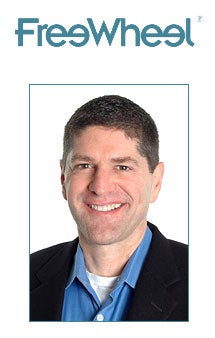
 Doug Knopper is Co-Founder and Co-CEO of FreeWheel, an online video advertising technology company.
AdExchanger.com: What are some of the key learnings that you’re bringing forward from your experience as DoubleClick’s GM?
DK: There are two key parallels that come through. One is the critical importance of building a strong team, which has been one of our key areas of focus. A second one is the parallel to the market cycle of 2001. Back then, the growth rate of the online display advertising market was early and uncertain, similar in many ways to the online video advertising market of today. Inevitably, the market comes back and we need to be ready for that. This is the time to innovate.
In your opinion, where does addressable media today compare to its potential?
It’s clearly the top of the first inning for addressable media. When you stop to consider that the bulk of display ads are still being served by legacy ad management software and systems that were initially installed years ago, or that semantic or story-based targeting is just getting under way online for text, you begin to realize just how little innovation there has been in the past decade.
How does Freewheel differentiate from other video ad inventory management platforms?

FreeWheel‘s key differentiators have less to do with any implied competition and more to do with solving problems that nobody has ever even tried to address before, like managing sales rights, forecasting video inventory, make non-binary ad-call decisions, and being able to allocate revenue shares in a distributed world. No other ad management system that we’re aware of is capable of doing any of these, let alone all of these, in a distributed, syndicated ecosystem.
Regarding your recently announced deal with Google/YouTube, why is Freewheel a good fit for YouTube?
The benefits to FreeWheel’s and YouTube’s customers are clear and many. Content owners want to be able to better manage their content on YouTube, and YouTube wants to attract more content owners, and both want to make more money. From our vantage point, the YouTube deal is the poster child for how the entire digital video ecosystem will work, and who will drive it – the owners of the premium content that deserves the widest audience.
Do you make a distinction in Freewheel’s services between online video (such as streaming that we might see on any of the major news sites) and digital TV? Do you serve both, in other words?
I think that the chief difference between the two idioms in your question have no reflection on FreeWheel’s business or technology, but that they reflect an entire different set of rules. FreeWheel technology can manage both of these environments for the content owners, and adapt to any business terms, or rights ownership matters that are conveyed.
What’s your view on ad exchanges – are video ads going to be a good fit for this model someday?
Premium video content will probably never be sold on an exchange. Think of the Super Bowl or other premium programming. It always sells out, and demand generally exceeds supply. That is where brand advertising resides. FreeWheel’s focus is on the premium video market, and we don’t see much role for exchanges in that market any time soon. Of course, as you work your way down through torso content and through the long tail, where there is more performance advertising and less brand advertising, then exchanges very well could play a role.
Please provide a hypothetical on how Freewheel.tv’s technology works. And then, where does Freewheel make money?
When a viewer watches a video at a distributor’s site, FreeWheel technology makes a series of real-time and interdependent decisions based on the rules and restrictions entered into our system. First: Who has the right to sell ads in this content? Second: What are the optimal ads to show in this content, taking into account all available ad opportunities and formats? And third: What is the revenue share and accounting for the ads that were shown? The combination of these decisions, and the associated activity around inventory forecasting and management, largely comprise the FreeWheel technology. We generate revenue on a revenue share based on CPM.
Can advertisers bring their own data to target? What targeting do you offer the advertiser?
We offer some of the most sophisticated targeting in the business. But, our technology is very flexible, so advertisers can utilize their own data
What’s your view on standardization efforts such as those led by “The Pool” and the IAB?
It is clear that we’re at an early stage in the industry and we support efforts toward standardization. Randall Rothenberg seems determined to make the IAB a more activist organization, and if you understand the crucial role that FreeWheel technology plays in the digital video ecosystem, you begin to understand how what we do promotes these standards and best practices.
If you were running a large media property today with a significant video library and/or online video programming strategy, how would you be preparing for the future?
I would do all I could to enable broader distribution and the widest possible syndication of my content possible while controlling the monetization rights to that content, predicting inventory yield and optimizing that yield in a distributed ecosystem. In other words, I would work with FreeWheel.
Follow AdExchanger.com (@adexchanger) on Twitter.