

 Netflix will inevitably need ads, predicted Jo Ann Ross, CBS’ president and chief advertising revenue officer, during a fireside chat at AdExchanger’s Industry Preview on Thursday.
“Maybe they’ll offer a lower-cost version of their service [or a different model],” she said, “but if they’re spending that much money [on content], they will look for ways to monetize it other than through subscription.”
That proclamation was one of the many that Ross made during the two-day digital marketing conference in New York.
Another prediction: More networks will reduce their ad loads, which echoed a promise NBC ad sales chief Linda Yaccarino made a few months ago.
CBS has already experimented with lighter ad loads in its streaming video-on-demand service, CBS All Access, which offers 20% fewer ads than in its linear programming.
Yet, more consumers opt for CBS’ ad-supported tier than pay more for the ad-free edition, Ross said, leading to the conclusion that consumers don’t mind ads – as long as they’re attached to quality content and a good user experience.

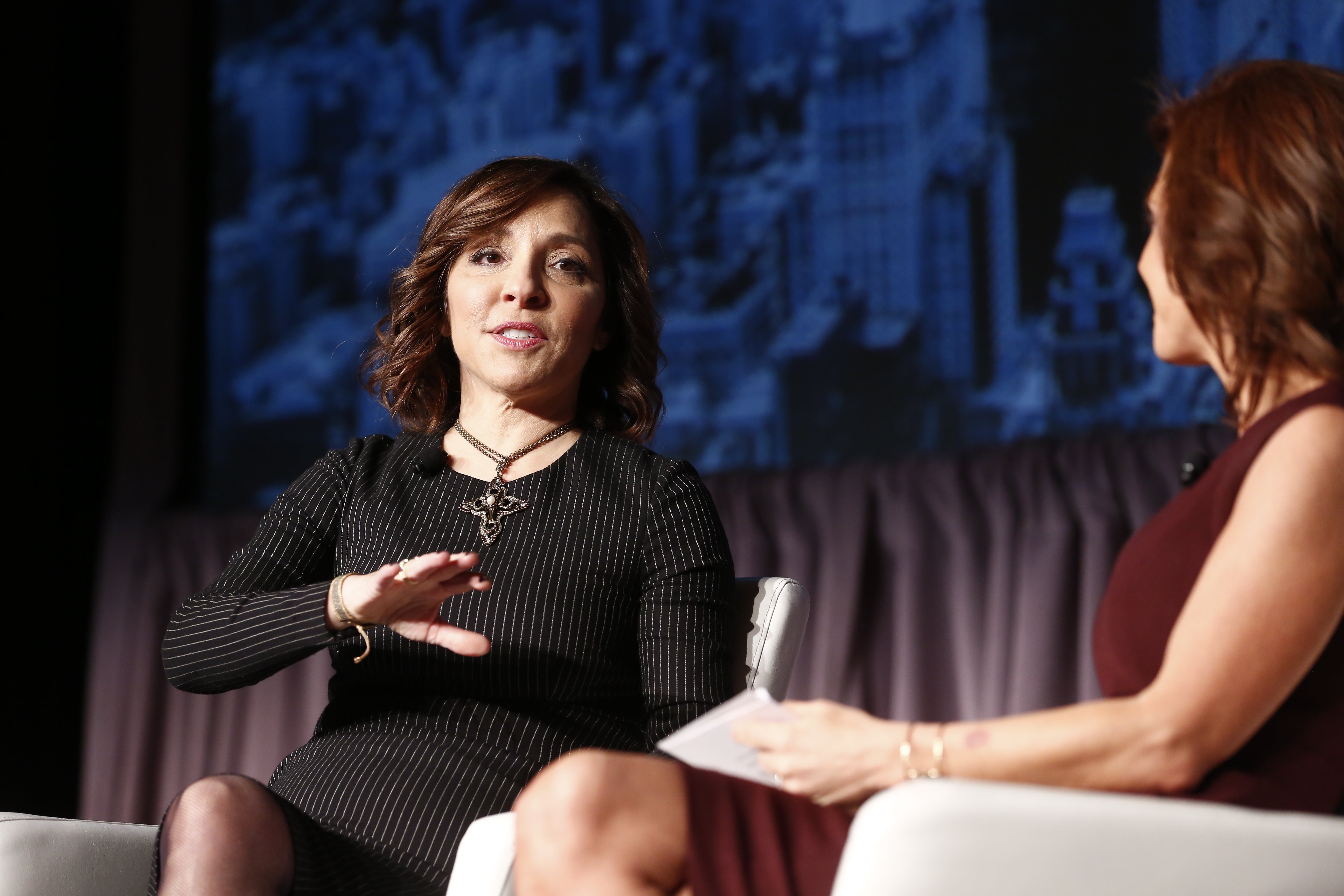
NBC’s Yaccarino also appeared at Industry Preview during a separate fireside chat. Following are three takeaways from CBS’ and NBC’s top ad sales execs.
Subscription video and linear TV can coexist.
With the rise of subscription video on demand (SVOD), more consumers are bingeing on time-shifted content than ever before.
Bingeing is both good and bad for broadcasters.
On the down side, it’s harder to capture viewers in a live, linear setting when they’re playing catch-up on their favorite series after its original air date. That said, many brand advertisers still view linear TV as the most effective reach play.
“Where do marketers go when they want scale and immediacy? They come back to broadcast,” Ross said. “So it’s a negative and positive for us.”
The upfront isn’t going away. It’s getting data-driven.
Ross noted that the annual broadcast upfronts are increasingly about the data.
“Clients are taking huge, multimillion-dollar budgets and might carve out a portion to transact on data,” Ross said. “Clients and marketers want to be more targeted. They want to understand the attribution points that do lead to return on investment.”
And the brand safety issues plaguing digital video portals make the upfront process more attractive.
“You can proactively pick and choose the content you want your messages to run across in advance,” Yaccarino said. “In television, time exists … it’s perishable, and you’re talking about specific spots in a pod at a certain day and time. That time goes away if you don’t schedule ahead. It’s why upfronts are important.”
 The broadcast community was a natural beneficiary of the tension last year between advertisers and online video portals, as big spenders like P&G and Unilever scaled back or reconsidered their online ad investments due to brand safety issues.
Since TV is transacted in a futures market and supply is finite, the chances of an ad showing up next to unsavory content are slim to none.
Measurement needs a makeover.
The lack of comprehensive industry standards across the fragmented worlds of linear TV and digital makes it difficult for TV networks to give marketers “the best possible opportunities,” said NBC’s Yaccarino.
Yaccarino has been bullish on finding alternative currencies to Nielsen as her network doubles down on outcomes-based selling and audience guarantees based on new data sets.
CBS’ Ross also called out the need for clearer visibility in measurement and a common metric that accounts for linear, live viewing, as well as over-the-top and on-demand viewing.
“Nielsen promised us a total audience rating,” Ross said. “They’re working on it, but we are not there yet. There’s so many different devices that you can’t measure accurately across them yet, which has been the challenge for Nielsen.”
In the meantime, networks are cobbling together data sets and piloting new measurement models for specific clients.
“This past upfront, for instance, we did some business on C35 when most business is transacted on age, gender and C7 ratings,” Ross said. “Maybe we’ll provide an age and gender guarantee or maybe there will be another guarantee based on first- and third-party attribution data. There will be tweaks along the way.”







