

Advertisers want measurement that assesses video brand safety.
And the latest beneficiary of that need is OpenSlate, a video analytics company that can determine if ads were placed alongside appropriate video content on YouTube.
The YouTube measurement partner said Thursday it’s bringing a new brand safety auditing tool for YouTube to market, partnering with independent agency Horizon Media and holding companies Dentsu Aegis Network, Omnicom, IPG (including most IPG Mediabrands and Magna affiliates) and Publicis.
WPP’s GroupM, which already partnered with OpenSlate, will also use the tool. The enterprise partnership will help OpenSlate scale its brand safety analysis across most of the major agency holding companies’ marketer clients who are advertising on YouTube.
While Google’s existing measurement and verification partners support viewability and audience-based measurement, OpenSlate’s specialty is video context.
OpenSlate can measure auction-based media such as Google’s TrueView ads as well as reserved media – like the top 5% of videos on YouTube allocated toward Google Preferred.
And although programs like Google Preferred seem brand-safe, it’s still hard to police because its video inventory comes from up to 10,000 YouTube channels, and most videos are user-generated.

While OpenSlate used to look at YouTube performance data, it now connects contextual data with bid-level data, so it knows which ads showed up next to which videos.
Horizon and other early adopters have traditionally used OpenSlate data for targeting purposes. Auditing enables post-campaign brand safety assessments independent of targeting.
OpenSlate is also customizable, since different marketers have different definitions of brand safety.
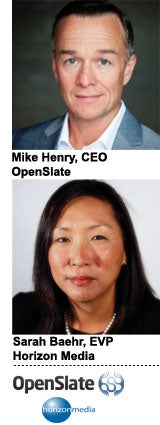
“Every single client we work with has a slightly different view on what [content] they do and don’t want to run next to,” said Mike Henry, CEO of OpenSlate.
For instance, an entertainment advertiser might not mind running a video ad against edgier content, since the intent is often to make a splash, whereas a CPG brand might be more conservative, said Sarah Baehr, EVP and managing partner for digital investment at Horizon Media.
“It’s determining what’s appropriate for a particular brand and what is their tolerance for risk,” Baehr added.
Despite the number of big advertisers that backed away from YouTube over the past five months, consumers didn’t stop watching YouTube videos.
“The big thing we’ve talked about to clients as well is that there should be some acceptance that this [YouTube] is a different vehicle,” she said. “A lot of content is largely created by individuals who have a very specific voice and the reason people watch them is because they have that authenticity.”







