

 It’s hard to bucket Ooyala.
The seven-year-old company, which already dabbles in both video monetization and digital content management, wants to be for TV “what Cisco is to network computing.”
While Ooyala’s a full-service consultancy that helps traditional networks migrate to the cloud, it also has a software business. The Ooyala Platform hooks up to a number of supply-side inventory sources to maximize ad loads while helping Pay-Per-View providers and broadcasters expand their subscriber base and subsequent revenue streams.
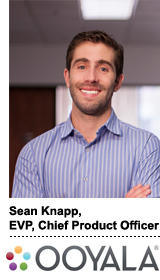
Sean Knapp, cofounder, EVP and chief product officer of Ooyala, spoke with AdExchanger for the next installment in a series of Q&As evaluating the video ads ecosystem. This series will also include Videology, Vindico and more. The interview was conducted prior to RTL Group’s acquisition of a 65% stake in SpotXchange.
AdExchanger: What problem does Ooyala solve?
SEAN KNAPP: Most of the ad providers – the networks, servers, SSPs, etc. – look at video from the advertiser experience, but we look at it more from the consumer experience. Our general contention is maximizing revenue, exposure and footprint, is very fundamentally aligned with maximizing the value of the consumer experience.People for the longest time have believed users don’t want to watch ads, that there’s a fundamental conflict between monetizing vs. not monetizing at all. We don’t need to go through why that’s ridiculous, but traditionally the industry has always looked at it very much in a micro-optimization model.

What do you mean by “micro-optimization?”
You run your ad server, do yield management, run some programmatic components and maximize your CPM and your ad load. I think that’s where a majority of the intelligence stops. We think there are far more decisions to make. For example, should we show one ad or two ads to the user? And how do we change that on a per-user basis or per piece of content? How do we get more sophisticated around how we monetize? For example, if I’m watching “The Blacklist” when it’s episode one of season one, you probably shouldn’t even monetize me. But for episode two or three, monetize me more aggressively because you know it’s highly sticky. What we do with our analytics is also look at, “How do we help maximize user retention?” If you monetize a user too aggressively, they leave. But, if you monetize them right, you retain them and you generate the highest amount of revenue that ultimately reinforces the creation side of your business, which is what everybody benefits from.
So, you take a macro approach?
We try to help our customers understand how do you maximize revenue over a length of time. We certainly focus more on the sell side and we work heavily with publishers. We play also in analytics and the culmination of the (end user) experience. Maximizing your revenue over a quarter or six months is directly in line with maximizing for consumer retention and it also helps maximize your overall CPM and ad load. We try to help them take a more macro perspective of their business, which is similar to when I was at Google as a lead for our content Web search team, we asked, “How do we maximize our ad load knowing that users will eventually leave, and how do we take a quarterly or year-long view of maximizing revenue over an aggregate audience time?”
BrightCove also makes cloud-based software for video delivery and media monetization. Do you compete?
We used to compete against BrightCove, but we have very different philosophies. Ooyala has 500-600 customers and we’ve really focused on the premium content market and that’s the lion share of the business. We decided quite awhile ago that 95% of the content we all consume today and will consume is premium TV content moving online. I would say where we compete the most is honestly where there’s not a lot of public market competitors. We compete a lot with systems integrators and against in-house teams. When we go into the large cable operators and telcos, you see large consulting groups like Ericsson and Accenture who have been hired to build one-off solutions, but we are seeing a massive shift in the market to move toward cloud or fully hosted. Not a managed service. That’s quite honestly why we focused where we have.
The video ad market is seeing heightened consolidation. What’s driving this?
Google is acquiring what I would call next-gen premium content providers like Twitch. They’re not buying Time Warner. You see rumors abound about Yahoo talking to all sorts of companies and they’re trying to buy more video technology to uplevel some of their existing investments. We see Facebook very focused on the ad side, buying LiveRail so they can drive really high CPMs because they know a tremendous amount about users and can drive a highly targeted advertising experience. Nevermind advertising on Facebook. They want to build the AdSense, if you will, for video and draw a higher CPM video ad across all of the other customers of LiveRail, not just Facebook.com. While everyone is making different bets, it is all being catalyzed by the same underlying theme that we’re entering the next era of online video – that it’s the future of TV and everyone is scrambling as quickly as possible to really maintain a pole position in a fast-moving market.
Are publishers concerned that a select few (Facebook/LiveRail and Comcast/FreeWheel) could ultimately own the video data pipes?
We have a number of customers who use FreeWheel. We work with all of the ad servers and the networks (like) FreeWheel, LiveRail, a handful of others and even the regional players as well. I can tell you there’s been tremendous reaction we’ve seen from the market. I get Comcast’s strategy. There’re many reasons why they’re buying Time Warner Cable, but one of the major reasons why is they will have every major market in the country. Pair that with FreeWheel and they have most of the online premium broadcasters as well. They can put together an entire package they can now sell coast-to-coast, with every major metro coverage, online/offline reach and that is really very compelling. There’s a lot of people who say, “That gives Comcast too much power and we’re not going to play.” We do have some customers who say, “We need alternatives.” And we don’t compete with FreeWheel, but people are asking, “Are there options?”
How are you funded and what’s your headcount?
We founded the company about seven and a half years ago now. We really focused on helping our customers monetize. I think where we’ve been very successful is the lion’s share of our revenue and business is with the broadcasters, networks and operators and focusing on the premium side of the market domestically, but about 45% of our revenue comes from international. Today we’re about 330 people. We’ve raised $122 million in total from a variety of Silicon Valley investors early on to a number of strategic investors later on.
Next on the agenda? Is an acquisition in the cards?
There is a ton of activity always circulating in the industry and we’ve had an acquisition offer for the company every year we’ve been in operation and we’re still standalone. We’re incredibly dedicated to our mission, which is to be to TV what Cisco is to network computing.
That involves, from a product roadmap standpoint, extending a lot of what we do around live video content and expanding a huge amount on analytics. So no longer just reporting, but content recommendations, things that drive 40+% increases in overall consumption to our publishers, as well as [develop] more monetization methods and [determining] the optimal ad load. For us, we’ve been very successful in Latin America and APAC and I expect us to push hard in those international markets. We’re very focused on a few thousand high-end broadcasters in the world, that handful drives 90% of all content consumption and what we think is the opportunity here.
Correction: An earlier version of the story stated Ooyala serves TiVo customers. Ooyala serves broadcasters and publishers and Pay-Per-View providers.






