 Google released a slate of new shopping ad products on Tuesday, upping the ante in commerce marketing as Amazon, Facebook-agram and Adobe ramp up their shopper ad businesses.
Google’s new shopping ad formats, unveiled at Google Marketing Live in San Francisco, tie formerly siloed properties within Google, such as YouTube and Maps, into a more cohesive media offering.
For instance, Discovery Ads, which will launch globally later this year, will bring swipeable product images to the YouTube homepage, the Gmail promotion inbox and the Discover feed, which is Google’s main search response page.
Gallery Ads, also coming later this year, will let a brand or retailer take over the top of the Discover feed with images of their products. Large, glossy pictures at the top of Google mobile searches, where there isn’t much screen real estate, could create valuable inventory.
The new shopping ad formats charge per engagement, which Google counts as a click or when someone swipes at least two images in the ad carousel.
Google is still juggling the splashy new ad formats with organic user search experience.
“Part of what we’re learning as we ramp up this test period is how to make sure we get that balance right,” said Brad Bender, Google’s VP of product management for ad tech.

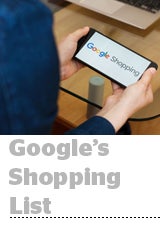
But Google won’t worry about product inundation in Google Shopping, its new marketplace where shoppers can find products and deals while retailers or ecommerce merchants compete for online window-gazers. Google Shopping will funnel users from Gmail, Maps, Search, Google Images and YouTube, Bender said.
Google is approaching commerce “from more of a platform perspective” compared to a competitor like Amazon, Bender said. For instance, Google is cutting its own home delivery service, which is part of Google Express, in favor of the shopping hub, where retailers own the payment processing and fulfillment. Google takes a smaller piece of the overall pie, but isn’t burdened with expensive shipping and returns.
Google is also expanding its deep-linking capabilities, enabling users to be redirected from the web to an app, depending on which is most likely to convert or drive high lifetime value. Food delivery apps or travel booking services store credit card info and personal preferences, which can create a seamless sales experience, said Sissie Hsiao, Google’s VP of product for mobile app advertising. Or in some global markets with restricted data use, the web may be more effective than an app.
Hsiao said brands and retailers are devising their own calculus for commerce decisions, like whether to deep-link a site shopper to an app install, which introduces friction, because the shopper must download and set up the app, but generates higher potential lifetime value.
As web browsers like Apple’s Safari become less trackable, Hsiao said siphoning audiences to apps could become more important in other verticals, such as for news publishers with limited returns on non-personalized web display ads. Advertisers would pay more for deep-linking ads if publishers prove they lead to mobile or store conversions.
“Media channels have had a traditional divide because of how conversion tracking is separated for apps, the web and in stores,” she said. “Now we’re bringing these signals together to bid and optimize against.”