
 As retailers, both online and offline, prepare for this year’s holiday season, the evolution of the e-commerce space is expected to have an even bigger impact on the way people choose to buy things and how marketers attempt to influence what they buy.
Citigroup analyst Mark Mahaney attended the eTail East conference in Boston last week and was struck by a provocative keynote by Phil Thompson, VP for marketing and e-commerce for Fossil, called “Why eCommerce will be dead in 10 years?”
Thompson outlined the advent of mobile apps, mobile point-of-sale tools, geo-targeted services & promotions, as well as social media and even shipping improvements as playing clear roles in shaping the landscape. It would seem that the Amazon’s and the Groupon’s would have a clear advantage. But Thompson’s view, that the future of e-commerce is still up for grabs — a point that appears to be backed up by a study released this week by WPP’s GroupM Next.

In particular, both brick and mortar retailers and online “e-tailors” will have to make significant adjustments to their business models, including diversifying across various channels — silos must be taken down, Fossil’s Thompson said. Ultimately, Thompson says long-term winners will be the ones who can most clearly “unify consumer the experience” across these diverse channels, according to Mahaney.
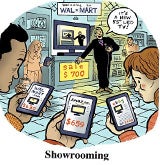
This week, GroupM Next looked at trends surrounding “showrooming” — the habit of consumers comparing prices in retailers physical stores on their smartphone while in-store, then exiting to complete their purchase online. (The report is available as a free download; or, just read the press release.)
The topline findings of the report, which was based on an online survey of 1,000 people, showed that 45 percent percent of customers shopping in-store at brick and mortar locations will walk out and complete their purchase online for a discount as low as 2.5 percent. This number jumps to 60 percent of shoppers who will leave and purchase a product online for a savings of 5 percent.
Being able to tell who is the bigger discount shopper and who isn’t is going to be crucial for businesses. And it will depend heavily on being able to “unify” online and offline behaviors — especially mobile, which has largely proven elusive to programmatic buying. But marketers and agencies have come around on tighter targeting methods and real-time bidding — especially in the mobile space, which has remained experimental for most major brands. As a result, the competition for mobile users will heat up — and so should the competition to provide smarter ad serving and data management.






