
 When Publicis Groupe launched it five years ago, VivaKi Audience On Demand was among the first holding company trading desks. And Google was its key partner, supporting a great majority of AOD’s ad serving and auction-based display media buying. But those days are over.
As of Q1, Google’s DoubleClick Bid Manager (formerly Invite Media) is no longer AOD’s top source of digital ad inventory. That distinction belongs to Turn, in a striking turn of events that owes much to the rapid rise of the Facebook Exchange.
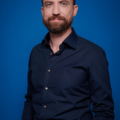
AOD’s General Manager Chris Paul took the reins last fall, by which time it was already apparent that the trading desk’s reliance on Google had become an Achilles’ heel. Paul took steps to add other trading platforms to the mix, including Turn and MediaMath for display, Adelphic for mobile, Videology and Adap.tv for video and Voxsup and GraphEffect for social.
“The partnership with Invite [is] still important,” Paul said. “But there’s differentiation among buying technologies out there. The launch of Facebook’s Exchange was a big moment where Turn and MediaMath created [a value proposition].”
Launched in 2008, AOD was arguably the first holding company trading desk and is one of the genre’s acknowledged heavy hitters. Its global headcount of 220 (150 in the US) puts it in a league with WPP’s Xaxis, and at any given time AOD says it manages campaigns for up to 400 brands. The number of campaigns can be much higher, especially on the social side, where a single advertiser may run up to a dozen regional or product specific campaigns.

Early on, AOD worked almost exclusively with Invite Media. The consolidation of spend with a single buying platform was controversial, and AOD has stood accused over the years of receiving special treatment from Google. A 2010 TechCrunch story cited sources alleging that AOD had received “kickbacks” from Google. Despite the grumblings from rival DSPs and client procurement agents, the one-DSP strategy never looked seriously unwise – that is, until last June, when Facebook ramped up its ad exchange and denied access to Google and, by extension, to AOD.
Since then, FBX has ballooned into a programmatic behemoth with upwards of 7 billion daily impressions exposed to RTB demand. And other “native” ad platforms are waiting in the programmatic wings. Twitter is doing due diligence on its own exchange, according to sources at several DSPs who suggested plans may still be nascent. (Read Ad Age’s report on the Twitter exchange idea.) Several other social and mobile titans (Tumblr, Apple) are viewed as likely to open the door to retargeting dollars.
With this state of affairs, Google has been forced to cede ground to vendors such as Turn, MediaMath, Dataxu and X+1. So it’s no wonder AOD’s eggs-in-one-basket strategy is a thing of the past.
Paul stresses that the Google relationship remains strong. And Google, for its part, says AOD has been an instrumental partner in evaluating and rolling out an integrated DoubleClick buy-side ad stack. That will continue. For instance, AOD is now busy migrating clients from Invite to DBM.
“We don’t want to devalue the relationship,” Paul said. But he says all trading platforms are not created equally, especially as consumer usage shifts to mobile and social. Adding partners has surfaced new inventory and “opened up new opportunities for the agencies that have their preferences.”







