
‘It’s Never Too Late’: OpenX CEO John Gentry On Suing Google For Crushing Competitors
Why sue Google now, when so many years have passed? Because “the pattern of anticompetitive behavior continues,” OpenX CEO John Gentry tells AdExchanger.

Why sue Google now, when so many years have passed? Because “the pattern of anticompetitive behavior continues,” OpenX CEO John Gentry tells AdExchanger.

I didn’t attend WWE’s “Monday Night RAW” event in Brooklyn for love of wrestling. No, I was there to check out the ad content – to the point where I set up a brand-new ad-supported Netflix account from my phone to see where and when the ad breaks actually start.

The Trade Desk continued its shaky 2025 earnings schedule when it reported Q2 results on Thursday.
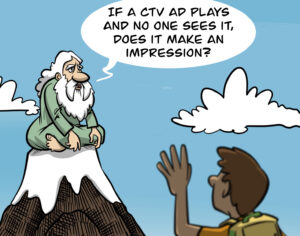
Enjoy this weekly comic from AdExchanger.com that highlights the digital advertising ecosystem …
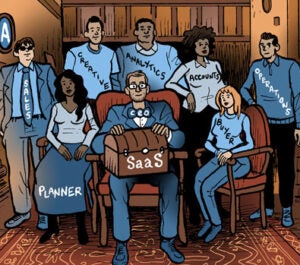
The pivot to AI has led to a gap in many SaaS and ad tech companies’ payment models; AppLovin bounces back in Q2; and Grok might be your newest media planner.

Total revenue for the quarter was $9.8 billion, up only 1% year-over-year from the last Q2 quarter total of $9.7 billion – which is modest, but at least in line with company expectations.

OpenX filed a lawsuit against Google over its anticompetitive practices. And HyphaMetrics claimed victory against Nielsen in court over a patent lawsuit.

After a recent expansion, Porter Airlines partnered with Samsung Ads Canada to reach new customers with timely and relatable ads.

PetSmart adopted Hightouch’s AI decisioning tool in 2023 to better reach its customers on a one-to-one basis through nuanced insights into campaign results.

The SSP is betting on the DOJ’s antitrust remedies, plus closer relationships with agencies, DSPs and mid-sized advertisers, to help it eat some of Google’s lunch.

The New York Times’ growth rate blows other large news companies out of the water; Shopify’s shares leapt by 20% after an upbeat Q2 earnings report; and Google’s AI Overviews may or may not be causing web traffic to plummet, depending who you ask.

Ever open the Disney+ app and experience cognitive dissonance when shows like “The Handmaid’s Tale” and “It’s Always Sunny in Philadelphia” appear in the recommendations? Well, expect more of that in the future.

Zillow is the pilot brand advertiser to test a new programmatic buying strategy known as containerized RTB. The strategy embeds the DSP or ad-buying platform intelligence, in this case the startup Chalice Custom Algorithms, within the SSP, which is Index Exchange.

Volta Media, which is owned by the gas station and energy giant Shell, will be shuttered by November and its network of more than 2,000 charging stations will be dismantled this year.

Too bad actor Ryan Reynolds didn’t join CTV ad platform MNTN’s first-ever earnings call on Tuesday. It would’ve been fun hearing Deadpool answer questions from investors.

Paul Longo, GM of AI in ads at Microsoft Advertising, breaks down what it means to bring ads into conversational experiences and how AI-powered tools are changing the way advertisers work. Plus: Microsoft may be shutting down the Xandr DSP next year, but that doesn’t mean Microsoft is getting out of the ad tech game.

Almost a decade ago, running multiple retargeters across the same user base was a recipe for inefficiency. But the landscape shifted, and the data makes that clear.
RE/MAX gets into the retail media game; Meta loses a class-action lawsuit over how it handled period-tracking data; and the IAB Tech Lab unveils its ad delivery playbook for live events.

People Inc. – the former Dotdash Meredith – is fighting on multiple fronts to keep its business growing as Google Search declines precipitously as a source of referral traffic.

Late last week, a federal jury in Delaware found in favor of HyphaMetrics, a measurement startup Nielsen was suing for allegedly infringing on two of its patents.

Newton Research announced its $9 million Series A raise on Tuesday. The funds will go toward hiring as demand for Newton’s specialized AI agents grows.

As the advertising industry races forward, core technology providers – particularly ad servers, dynamic creative platforms and attribution or measurement companies – play an increasingly critical role in powering the infrastructure that enables targeted, data-driven and performance-optimized campaigns at scale. But one outdated pricing model is becoming an obstacle to innovation, efficiency and effectiveness: CPM-based pricing.

“I tried to write it so it’s not exclusively for ad tech nerds,” Ari Paparo told AdExchanger of his new book, about Google’s advertising dominance. “And I mean that affectionately.”

Google’s former SSP practices are the legal gift that keeps giving; Perplexity has been disregarding robots.txt files; and ads prop up a large chunk of the US economy.

CleanTap, an ad tech startup launched by the founder of Method Media Intelligence, wants to separate the wheat from the chaff in CTV by serving as a curation layer between DSPs and SSPs.

Agentio’s AI connects advertisers with relevant content creators through an automated bidding process, similar to the programmatic system.

As the quality of answer engines improves, people will click through to publisher websites less often. The solution isn’t to wage war against AI. It’s time to build a sustainable future for all stakeholders.

Coinbase is getting into ads; Etsy can’t rely on search ads for very long; and Zuckerberg wants to buy AI companies.

Change can be bumpy. From The Trade Desk’s Solimar-to-Kokai transition to Nielsen’s transition to its Big Data + Panel offering, we go inside customers’ challenges with these two transforming platforms.

My YouTube creator obsession has me fascinated by an ongoing trend I’ve noticed in the CTV industry: A lot of companies that produce free ad-supported channels rely on content that already exists on YouTube.