
Shopify Launches A Product Network That Will Natively Integrate Items From Across Merchants
Shopify launched its latest advertising business line on Wednesday, called the Shopify Product Network.
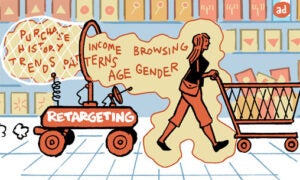
Shopify launched its latest advertising business line on Wednesday, called the Shopify Product Network.

Almost everything in AI feels big. But are you looking at the next Gangnam Style or the birth of a new industry? Here’s how to assess whether an AI vendor is likely to matter in two years.

Instacart tried dynamic pricing for groceries; AI companies aim for an open-source agentic AI standard; and Tinder digs into users’ camera rolls for data.

Bringing programmatic ads to AI chatbots marks a shift in the business model for AI search, while traditional publishers must find new ways to monetize.

On Tuesday, TV advertising company Cadent announced the acquisition of VuePlanner, which specializes in contextual advertising and media planning for YouTube.

Marketers used to wait for obvious signals, like a product page view, a cart add or a keyword search, before triggering campaigns. But in today’s fractured landscape, those signals can arrive too late.

The Economist is charting its own course in the age of AI, says Nada Arnot, the 182-year-old publication’s EVP of marketing. It’s steering clear of licensing deals and lawsuits and partnering with Claude on its own terms.

You are not immune to shopaganda; AI responses are more limited than retailers would like; and FIFA is forcing ad-mandated water breaks.

From 2015’s ad tech gold rush to today’s cautious comeback, telcos are once again testing whether they can turn subscriber data into ad dollars – this time with privacy as the selling point.

For years, MFA was a mostly web-based problem. Now, generative AI has supercharged the made-for-advertising model, and it’s infecting social media feeds and vertical video platforms.

People want news, but not from news outlets; X’s blue checkmarks are coming home to roost; and Meta is finally paying publishers (kind of).

Thanks to mitigated tariff effects and the AI boom, WPP Media’s 2025 ad spend forecast has good news for marketers.

After a prolonged will-they, won’t-they phase between Paramount Skydance and Warner Bros. Discovery, Netflix swooped in with an $83 billion offer on Friday to acquire the Warner Bros. side of the business.

Criteo recently debuted new AI tech and pilot programs to a group of reporters – including a backend shopper data partnership with an unnamed LLM.

Consumer spending on Black Friday Cyber Monday was up 7%. But prices are high, and it’s affluent customers who are doing the most spending in the US. Plus: the challenge of being an ad buyer managing campaigns on Meta during “Glitchmas.”

Is it too soon to start thinking about New Year’s resolutions? Because I’m setting a goal for myself to start talking to more media planners, agency executives and buy-side experts.

Enjoy this weekly comic from AdExchanger.com that highlights the digital advertising ecosystem … and happy Thanksgiving!
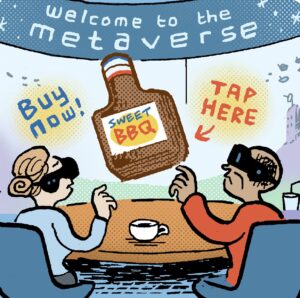
The metaverse hype is over; Apple Maps forays into advertising; and streamers vie for HBO Max and the WBD studio archive.

Marketers know that quality matters – and here’s yet more proof. But breaking old habits in digital media is easier said than done.

Mobile apps are now at the center of the consumer relationship. They’re where customers browse, buy, stream, check balances and redeem loyalty rewards. However, app measurement remains one of the weakest links in modern marketing.
Fizz, a new discussion and news feed app that targets college campuses, is helping marketers reach college students authentically.

On Google and Meta platforms, AI search becomes the default; TTD might cut its costs; and apparently, toddlers like AI slop on YouTube.

Grocery TV’s Marlow Nickell joins AdExchanger’s Inside the Stack to explain why in-store retail media is “inevitable” and what brands miss when they overlook the shelf.

There’s a paradox at play in how marketers are adopting artificial intelligence.
Eighty-seven percent of US advertisers say they plan to increase AI usage over the next 12 months. But only 45% feel confident in their understanding of how AI-powered technologies work. That 42-point gap is an indicator of early friction in AI adoption.
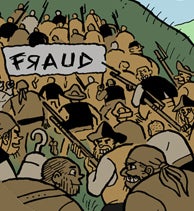
Agency buyers are facing a new wave of Google account hijackings that steal funds and lock out admins for weeks or even months.
Spencer has exited The Trade Desk after 12 years, marking another major leadership change amid friction with ad tech trade groups and intensifying competition across the DSP landscape.

Broadsign may actually be building a platform that will make an attractive acquisition target down the road. And one of the major cross-platform Big Tech players feels like the most likely buyer.

Newsweek launches an AI-powered homepage to offset traffic losses from AI search; OpenAI pulls an emergency pivot back to focusing on ChatGPT; and copycats dilute the impact of Spotify Wrapped.

America’s biggest department stores are changing, and changing fast.

AI hype is everywhere, but Moloco CEO Ikkjin Ahn says the real winners in ad tech will be those who can move beyond flashy demos and harness AI at true hyperscale.