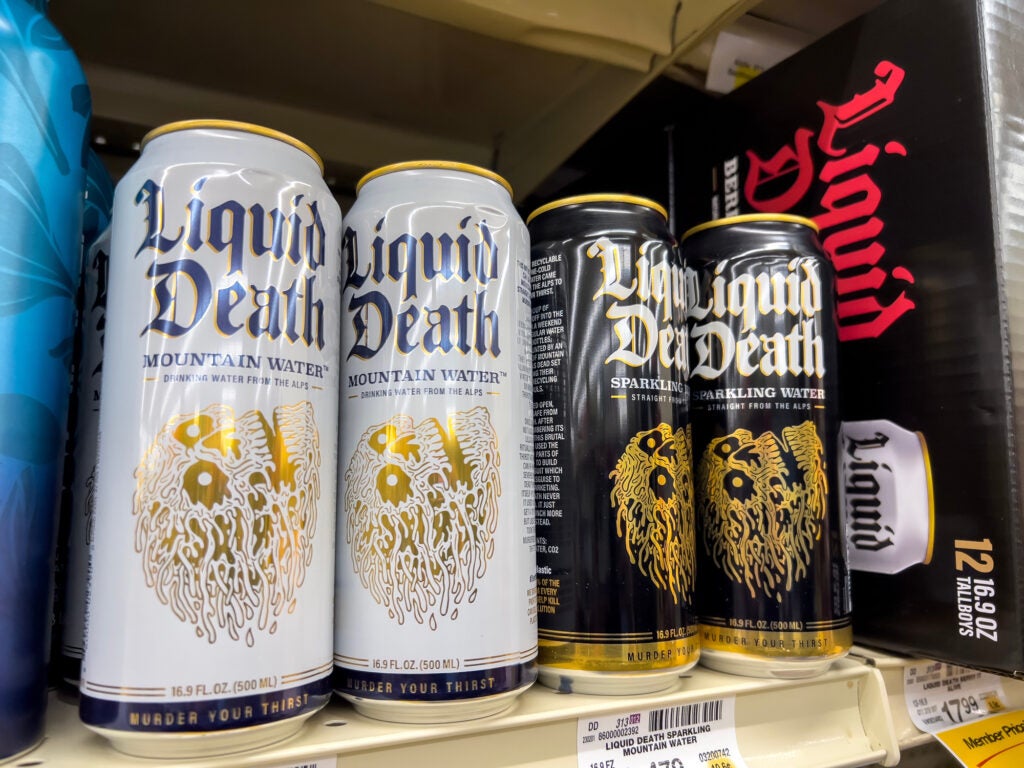
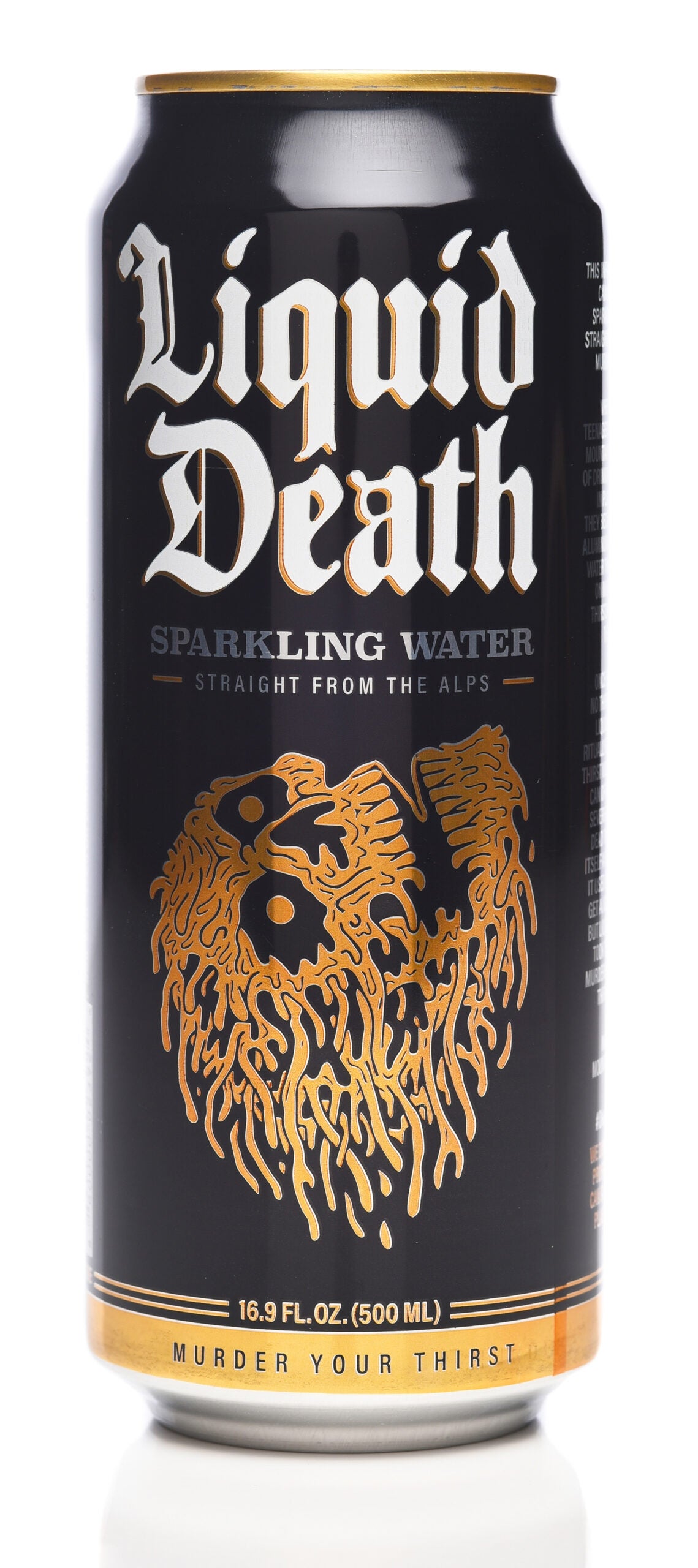
Liquid Death is known for its irreverent branding and provocative slogans, such as “murder your thirst” and “death to plastic.”
Its campaigns also lean into that over‑the‑top vibe.
A couple of years ago, the heavy-metal-inspired canned water brand collaborated with Burton to create deliberately dangerous flat snowboards and dared professional snowboarders to ride them and “not die.”
Before that, it manufactured limited-edition skateboards using red paint mixed with a vial of Tony Hawk’s blood.
And, more recently, the brand teamed up with e.l.f. Cosmetics to produce a coffin-shaped makeup set called “Corpse Paint,” riffing on the famous KISS look.
But behind all that edgy marketing is a classic CPG problem: Most of Liquid Death’s sales still happen at the register, which is where media measurement goes to die.

“Attribution is not easy in the real world,” said Benoit Vatere, Liquid Death’s chief media officer. “ROAS on any given platform doesn’t tell me anything because, of course, it’ll just say, ‘Hey, I’m doing a great job.’”
“I don’t even pay attention to that stuff,” he added.
Murdering misleading measurement
To get closer to what’s actually happening in stores – and a sense of whether its campaigns are really driving sales – Liquid Death has been piloting a new approach from performance marketing platform Ibotta called LiveLift, which measures and adjusts promotions in near real time.
Ibotta uses shopper data from its own app and retail partners, including Walmart, Instacart, DoorDash and Dollar General, to compare people who see an offer with similar people who don’t. Then it looks to see how their purchases differ afterward.
But instead of just counting how many coupons were redeemed or how much sales went up overall, the tool focuses on incrementality, which means, in Liquid Death’s case, the number of cans sold that wouldn’t have been sold otherwise.
This insight helps Vatere decide where and when to cut or to spend more.
If a promotion is generating a healthy amount of incremental volume at an acceptable cost, the team can shift more budget to that retailer, region or tactic. But if the lift flattens or the cost-per-incremental dollar of sales climbs too high, he knows it’s time to change the offer or redirect spend elsewhere.
When the test and control groups behave essentially the same, it’s a strong sign that a campaign isn’t actually doing much for sales, said Bryan Leach, Ibotta’s founder and CEO.
“But you don’t know that until you run the experiment,” Leach said. “You have to put a stimulus into the world and observe the answer using statistics.”
Killing the guesswork
Getting a clean read on how any single campaign is impacting what people buy is quite difficult, though, when TV, CTV, social, influencer, retail media, in-store promotions and whatever else are all running at once.
 “Usually, it’s not just a single thing that moves the needle,” Vatere said.
That’s one reason he doesn’t put much stock in slow, backward-looking media mix models or geo-testing, which can be disruptive. What Vatere wants is a view of incremental sales while campaigns are still running so he can make decisions week to week – or even every few days – about what to keep running, what to tweak and what to shut off.
Liquid Death now keeps LiveLift running in the background and checks it regularly to see how its promotions are doing. Over time, it’s become less of an experiment and more of an always-on reference point for how aggressively the team can spend.
It’s also changed how Liquid Death thinks about brand spend, Vatere said.
As the brand shifts more budget into TV, streaming and other broad-reach channels, he said, it helps having a safety net of sorts at the bottom of the funnel to justify tactics higher up.
“If I have a tight net at the bottom,” Vatere said, “I can feel a lot more confident pushing hard at the top.”
And Liquid Death is also using the data to look beyond simple new‑to‑brand metrics and regular customers. Attracting new buyers and appealing to existing fans is great, he said, but there’s also a whole cohort of people who bought the product once or twice and then dropped out – which, in CPG, doesn’t necessarily mean they didn’t like it.
“There’s no loyalty in CPG,” Vatere said. “If you buy water, you usually bounce around between four or five brands. On the media side, that means the strategy is often about needing to remind people, to tell them, ‘Hey, remember you bought us once? Well, we’re still here.’”
With incrementality data in hand, the strategy can shift. More media budget can go toward light or lapsed buyers and less toward super fans who would probably open their wallets regardless.
Ibotta’s Leach framed this mindset as part of a broader shift toward outcomes-based media buying, where brands define the results they’re willing to pay for and let the data determine where the money goes.
Rather than deciding in advance which channels “work” and then building a model around proving those assumptions, he said, the point is to see what actually happens when different offers and tactics hit the market, and then move spend accordingly.
One way to do that is by anchoring decisions to a simple profitability line. If, say, a brand’s margin on every sale is 30 cents per unit, then 30 cents becomes the North Star for optimization.
“As long as the cost-per-incremental dollar is less than 30 cents, we’ll keep spending,” Leach said. “It turns off when it becomes inefficient and on when it becomes efficient again, which is not all that unlike a Google campaign.”