

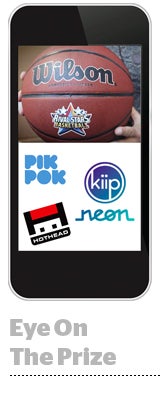
 When it comes to doling out rewards, app developers like Hothead Games walk a fine monetization line.
“You want to give meaningful rewards without hurting your economy,” said Kenneth Wong, senior monetization manager at Hothead, which makes a number of sports-themed and first-person shooter games for mobile.
While advertising is part of Hothead’s monetization mix, most of its revenue comes from in-app purchases, so incentivizing users with reward-based ads might disincentivize them to buy something in the app.
On that front, Hothead has been working with mobile rewards network Kiip, which offers users brand-sponsored real-life rewards or virtual currency when they achieve something in the app, like beating a certain level in a game or hitting a new personal best in a running app.
It’s different from rewarded video or an offer wall because users are being rewarded for actions they’d be doing anyway, rather than encouraging users to perform tasks specifically in order to earn a reward.
In late August, Kiip rolled out its developer toolkit, dubbed Neon, to expand its footprint in the dev community and connect developers to Kiip’s network of brand partners, which includes McDonald’s, Coca-Cola, Kraft, Campari and Unilever.
Developers can access the kit through a server-to-server integration – basically just “nerd speak for being able to integrate something without an SDK,” said Kiip CEO and founder Brian Wong They can also white-label the solution within their apps.

The setup is more appealing to brands, said Kiip’s Wong.
“Brands have had qualms about mobile because they didn’t think they’d have the ability to build their brand like they can on TV or with a full-screen ad,” he said. “But you can leverage the context of a moment and intercept consumers based on something they’ve already done.”
That can be something as small as a coupon for a cup of coffee or something more elaborate, like the branded basketballs New Zealand-based game developer PikPok gave away during a campaign in its sports title Rival Stars Basketball.
“Ads in their various forms have been a big part of our monetization strategy from the outset [and] we’ve been quite successful across all available formats,” said Mario Wynands, PikPok’s managing director. “But in recent years, we have been moving away from more traditional banner and interstitial formats to higher-value opt-in incentivized video and reward formats [because] these tend to be less intrusive to the user and/or provide significantly higher value for both the user and ourselves, so are much better for the overall experience.”
That said, rewards and in-app incentives have their downside.
Rewarded videos usually take 15-30 seconds of a user’s time and they generally attract people who only care about jumping through whatever hoop they need to jump through to get in-app currency. And offer walls generally require users to fill out forms to sign up for services or to leave an app to go and download another app in order to earn their reward.
Kiip tries to avoid that sort of spamminess by keeping users within the original app experience. When users earn a reward, they can save it to Passbook or opt to receive an email with redemption instructions.
Beyond the monetization opportunity, Wynands has noticed a positive impact on acquisition.
“There is a lot of word-of-mouth and viral activity on high-value campaigns as users want to spread the news [about] the app where people can win cool stuff,” he said. “Spikes in downloads are a great multiplier on the revenue uplift that campaigns already provide.”
Beyond the obvious candidates for moment-based perks like games and fitness apps, other categories are also ripe for rewards, including traditional publishers. Meredith, for example, has integrated Kiip into its Better Homes and Gardens Must-Have Recipes app, which rewards users for completing shopping lists and sharing recipes.
Another category on the ascendency is the selfie app, which lets users take, touch up and share pictures of themselves. Kiip sees around 14 million selfie moments per week across selfie apps like Perfect365, Camera360 and Meitu.
“There’s a lot of value in that moment when you’re saving a photo of yourself,” Kiip’s Wong said. “It’s a little vain, but it’s also very valuable. Think of an advertiser like Sephora or L’Oreal. They can be part of a beauty moment, and consumers can see that the brand isn’t just tossing up something display-oriented and calling it a day.”








