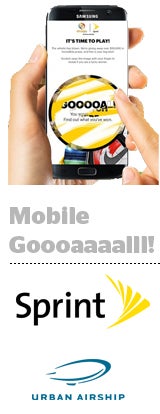
 Sprint is starting to see the mobile wallet as a natural complement to and extension of its native app.
Mobile wallet is on a user’s device by default – Apple Pay on iOS and Android Pay on Android – which creates a lower barrier to entry for brands that don’t have an app or want to engage users on mobile beyond their own app offering.
Users can save their credit card information there and make purchases, or store content like event tickets, loyalty cards, coupons and boarding passes.
It’s also a way to push out content without being too pushy, said Luis Martinez, Sprint’s digital lead for multicultural marketing.
“One of the challenges we’re facing along with everyone else is the need to find new and impactful ways to stand out a little while also providing value to our customers,” Martinez said.
That was the idea behind a recent mobile wallet pilot Sprint ran as part of a sweepstakes tied to the Copa América Centenario international soccer tournament in June.
Historically, the games take place in South America. The 2016 tournament was the first to be held in the US, which created a good opportunity for Sprint to reach out to the Hispanic consumers.
Sprint worked with Urban Airship to develop personalized passes that users could download to their mobile wallet.

The carrier took advantage of several new mobile wallet features from Urban Airship that came out of beta on Wednesday, including the ability to dynamically customize passes, track redemption and buy on a performance basis so clients only pay when users actually download content to their mobile wallet.
In Sprint’s case, more than 35,000 people signed up to receive real-time notifications from the brand about tournament-related news, scores and reminders before upcoming matches.
Every time a user’s favorite team scored a goal, that person would earn points and another entry into the sweepstakes for a chance to win a variety of prizes, including a TAG Heuer watch, a soccer ball signed by David Beckham or a free trip to New York to watch the final match.
Sprint was also able to automatically push out updates to mobile wallet content without the user having to take any action – quite a different experience than the friction created in the app world, where users are required to initiate updates to access new features.
But that’s not to say mobile wallets replace the need for an app, said Judy Chan, a senior product mobile marketing manager at Urban Airship.
“An app is like the full enchilada – it’s got everything in it and it’s also only really going to reach your most loyal users because mobile real estate is precious and super hard to gain,” said Chan. “But mobile wallet can be more specific and focused in purpose and doesn’t require the same kind of development work that an app does.”
Although Sprint’s soccer tournament campaign was only an early test of the technology, Martinez said he was pleased with the outcome.
Sprint saw more signups for its mobile wallet content during the course of the sweepstakes than it did for email notifications, and fewer than 1% of users uninstalled Sprint’s sweepstakes pass from their mobile wallet. The engagement rate was higher than Sprint’s usual benchmarks for display and social.
“That was a sign to me that people are receptive to seeing this kind of messaging and that mobile wallet is a viable channel for us,” Martinez said.
According to a survey of 2,000 consumers in the US and UK released by Urban Airship on Wednesday, 54% of consumers have used a mobile wallet in the past, with 30% of respondents claiming to have used it within the past week alone.
Beyond specific campaign-based activations, mobile wallets could also have an impact on more long-term participation in loyalty programs, Chan said. Sixty-nine percent of the people in Urban Airship’s study said they’d be more likely to use a loyalty card if it’s on their phone, while 73% said they’d be more likely to join a loyalty program if rewards were automatically updated and instantly available through their mobile wallet.