

 New mobile apps continue to flood the marketplace, making it harder than ever for developers to capture installs and repeat use.
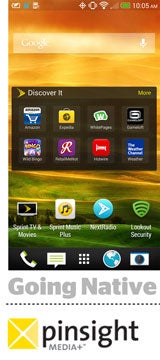
Pinsight Media+, a Sprint-owned company that provides mobile advertising services, is betting it can help them stand out as native ad units on Sprint Android devices.
Through a partnership with mobile ad network Millennial Media, Pinsight Media+ will display apps from Millennial Media’s advertiser base on the Samsung Galaxy S4, Moto X, HTC One and other mobile devices.
The ad units are available on two Sprint properties: Discover It, a widget that contains eight recommended apps for users to download from the Google Play store, and the Lumen Toolbar. As consumers browse the mobile Web, the Lumen Toolbar persistently appears on the bottom of the screen, featuring five recommended apps.
“It’s very hard to get your app noticed on places like Google Play and Apple’s App Store, but carriers still have interesting ways to get in front of consumers,” said Evan Conway, VP of strategy and monetization at Pinsight Media+. “That’s what these two properties are about: giving brands interesting places to get in front of millions of customers.”
Pinsight Media+ teamed up with Millennial Media to receive access to a wider group of advertisers, Conway said, but it will not be selling the app slots through Millennial’s real-time bidding platform. Instead of trying to sign up thousands of brands, the Kansas City, Mo.-based company will incorporate just a handful of brands at a time.

The native ads “are special and so there’s no RTB capability that touches these units, which is why the human element will play a very important part here,” Conway added. In addition, even though Pinsight Media+ delivers targeted ads to Sprint users, the native ad units will not be targeted at specific mobile users.
When users click on the Discover It widget or the toolbar, Sprint doesn’t “have a relationship with you yet, or information to target you at that point,” explained Conway. Sprint only delivers targeted ads to users who opt to receive them, which they can do with other ad units, he added.
Even without offering RTB or targeting capabilities, Conway is confident the company will receive numerous requests from advertisers for its new ad units. “Sprint is doing billions of impressions a month in its normal ad business,” Conway said, “so with these native ad units, we can afford to be picky about who we let in.”
Sprint launched Pinsight Media+ last year through a partnership with the mobile ad firm Amobee. The wireless carrier then acquired Kansas City, Mo.-based app developer Handmark and its subsidiary, OneLouder Apps [where Conway was the former president], this spring, merging it with Pinsight Media+.








