
 Often, a question doesn’t have an easy answer in the digital advertising business. This is a new column devoted to an answer to a single question – and providing a bit of space for it.
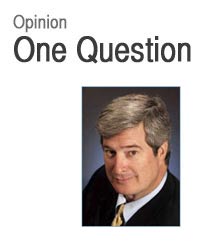
Today’s participant is Spanfeller Media Group CEO Jim Spanfeller who recently answered the following question during a conversation with AdExchanger.com…
AdExchanger.com: What do you see at the heart of today’s debate around consumer privacy?
JS: Well, let me preface by saying – I actually had this idea long before the U.S. Federal Trade commission came out with its paper. And the idea begins with recognition of the ongoing evolution of media in general and that it has been around different types of formats of content, whether they be audio, video, data, prose, text, what have you. All of this is coming together – something we all know as convergence.
And then, of course, there is the much‑yapped‑about consumer control. People think of consumer control as this notion of time‑shifting, which of course is true. We started thinking about it a couple years back at Forbes as what I called “Entwined media, ” which was the ability to control not just when and where I was involved with a specific storyline, but also how I was involved with that storyline. Was it a video, was it text, was it data? Was it some combination of all of the above? Or was it social, which is another phenomenon that had to come along as soon as we realized that the web was indeed interactive.
And I think this growing notion of consumer control is actually at the heart of the whole privacy issue. It actually is a way to make the privacy issue less about a religious conversation and more about a business conversation.

Because at the end of the day, you talk about privacy because everyone starts with the notion that privacy is good…that it is American if you will. The data exchangers and ad networks will say, yes, but this benefits the end user so they should be willing to give up some privacy because they’re going to see better‑targeted ads.
OK, maybe. Who knows. I think the bigger issue is that people want control. They want control over their experiences. And so I agree. I think there are people, lots of people, who will give up data about themselves willingly in return for something.
I don’t know what that something is. It might be more content. It might be cents‑off coupons. I think if you have a CVS card or a shopping card, that’s an analogous situation where you’re giving up privacy for money off. You’re letting people track what you’re buying, but in turn you’re getting 10% off.
So plenty of Americans will give up some of their date, they just want something in return for it. They want control over the experience. I think that’s what’s going to come out of all these discussions. I think this notion of privacy will quickly become aligned with transparency, and in fact I think the FTC release sort of fundamentally says that.
I think that’s where the world’s going to have to coagulate around and deal with. So the ad networks are going to have to find ways, if they’re going to exist, to be transparent about what they’re doing. Marketers who use reams of data aggregated by third‑party sources are going to have to be transparent about A) how they have the data, and B) what they’re doing with it.
Finally, I think all those things are doable. Targeting is not going to have to stop it is just going to have to get very much more controllable and way more transparent.
Ultimately, publishers are the ones that’ll be the most advantaged in a move towards transparency. They have a first party relationship with the end user and a history of doing user data relationships. The issues has been in the past that the publishers have just been idiots about three things A) recognizing that it exists, B) how to use it. And then C), most importantly in the past three years or so, is how to protect it.
The vast majority of data pillaging has been done without a publisher’s knowledge. They just turned a blind eye to it and never paid attention.
Follow Jim Spanfeller (@JimSpanfeller) and AdExchanger.com (@adexchanger) on Twitter.






