 Adchemy has sold its lead-generation and performance-marketing business, Actions, to erstwhile partner XL Marketing.
With the divestiture, Adchemy will focus exclusively on its software geared to the search marketing needs of large retail and ecommerce marketers.
With the sale, all employees working on the Actions business – which specializes in the financial and education verticals — will move to XL, and proceeds will be ploughed back into Adchemy. (No Adchemy founders or investors will take money off the table.) Other terms were not disclosed.
The 100 staff who remain at Adchemy will focus on developing and marketing the company’s SaaS platform to enhance the way search ads are created and placed. The company offers large retail marketers a means to buy product and keyword ads using a semantic “intent graphing” approach. (Read more in our 2012 interview.)
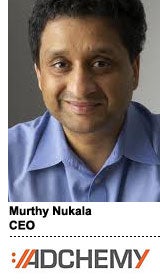
“If you look at algorithmic search, it’s moving toward a semantic-based way of doing things,” said Murthy Nukala, Adchemy’s CEO. “We think ads have to follow, but they have to go in the same direction of being powered by a semantic graph under the covers. The fact that we have a graph means that we have a significant advantage.”

Nukala places Adchemy in a small class of companies using semantic technology to improve ad experiences. Another company in the group is Bloomreach, he said.
When it was founded, Adchemy’s Actions lead-gen business was the company’s main focus. The sale echoes moves by other software companies to offload their services-based and network-based businesses through spin-off, sale, or shutdown. Last year MediaMath spun off its services unit into a new agency, Kepler Group, and Audience Science also recently unloaded its ad network, preferring to focus on a standalone data-management play.
The motives for such a shift can be varied, but often near the top are the much higher multiples paid for companies with software-based revenue models, relative to services-based businesses.
Nukala acknowledged the “exit” multiple is a factor, but added, “You’ve got to stay nimble and focused. It behooves you to divest what’s not core anymore. Having one of something and being the leader is much better than being two things and people not knowing who you are. Going forward there can be no doubt what Adchemy is about. It can only be helping ecommerce companies grow revenue faster.”
He added, “There’s quite a lot of precedent for decisions like this. They end up being good decisions.”