

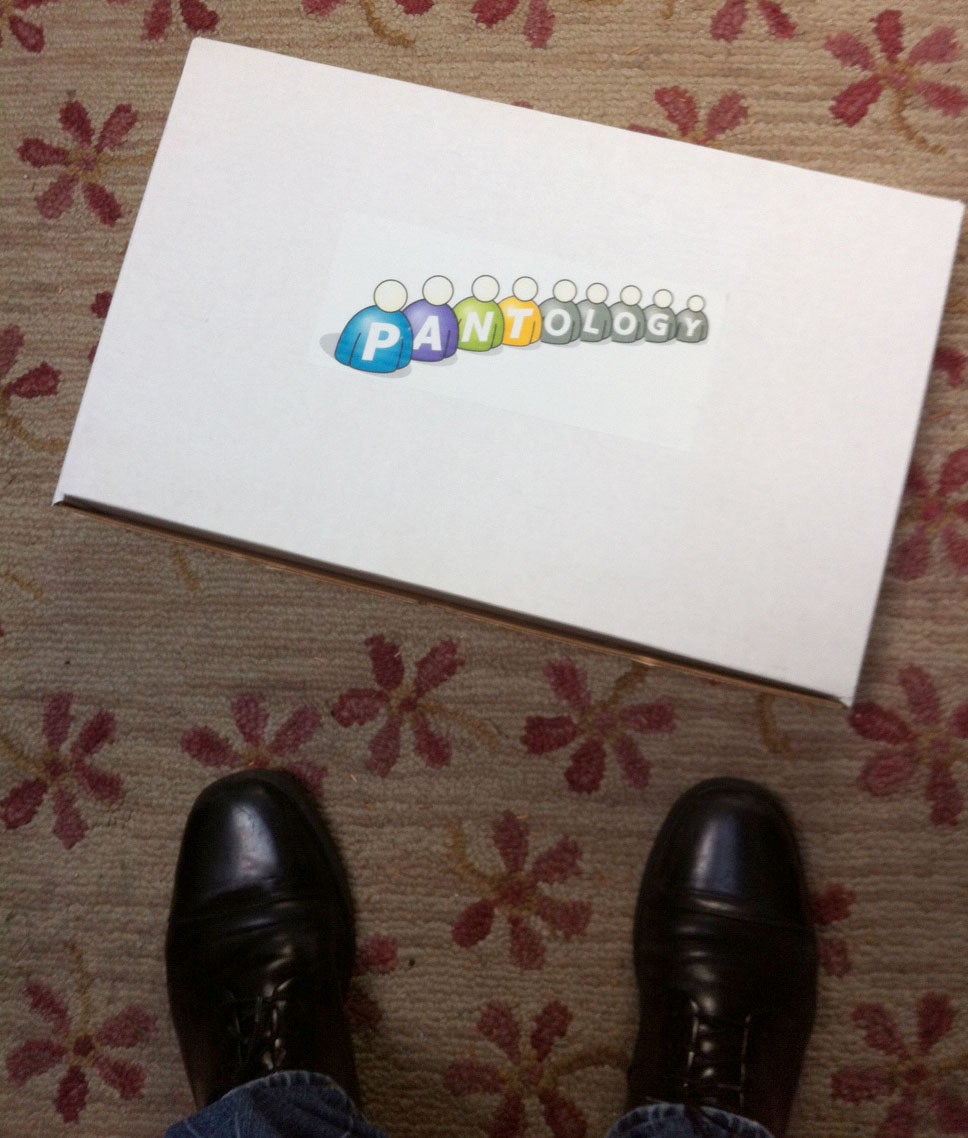
Pantology.
As archaeological finds go, AdExchanger’s recent investigation into the history of media buying has yielded a stunning discovery courtesy of a source from the ad ecosystem black market.
First thought to be yet-another-version of Candyland, AdExchanger scientists believe this gaming device came from the mid-to-late Right Media era around the time of Yahoo!’s acquisition of the seminal media exchange -around the 2007s.
The scribe for the “early days” game gives a sense of what it was like to work way back then as the rules are fairly straightforward:
- “You begin working at a new software startup that is promising to change the very nature of advertising on the Internet. Little did you know the zany antics of your new colleagues while they feverishly set about this industry revolution. Play Pantology. The game of advertising adventure and follow your dream straight through the ultimate victory – the Yahoo merger!”
Download the scribe’s complete efforts here (PDF).

The focus of the game is around someone known as “Prodman.” A diabolical title, to be sure, “prod” is often associated with cattle. But, in this case, it appears that a product management team may have spearheaded the development of “Pantology” and made the game with their own interests in mind. Given only four players can play at a time, it is thought the product management team may have only been four in number. These are all guesses on our part, of course.
The PANT acronym is thought to stand for Publisher, Advertiser, Network and Technology (?) people from pre-Yahooian marketing days. So, with Pantology, think “game about ad, network, tech, publisher people and science.”
Keeping with the “four” theme, the board itself is surrounded by four faces.

Not all faces have been decoded, but scientists note that the image below bears “a striking resemblance to an Evidon dude.”

And this one is believed to be a former Right Media chieftain:

Also, Yahoo’s early inclinations in the patent (or PANTent) portfolio business are suggested in the lower right of the gaming device.

Beyond that, and perhaps most revealingly, are the lifestyles of these people: wild, exotic, unfettered.

Still more cards – click the image below for a close-up…

AdExchnanger will continue to report insights from our ‘find’ as we play the game. Stay tuned.






