AT&T acquired AppNexus. So what’s it going to do with it?
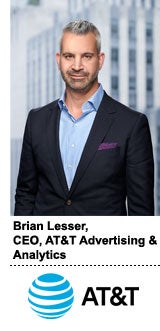
Both the buy side and the supply side will remain intact. AT&T will build out each part of AppNexus’ business, Brian Lesser, CEO of AT&T advertising and analytics, told AdExchanger.
AT&T data will become a “very meaningful” carrot for buyers using AppNexus’ DSP, he said. WarnerMedia – Time Warner’s recently rebranded content assets – will plug into AppNexus’ sell-side business.
Lesser wants the AT&T-AppNexus platform to let buyers measure performance and understand audience behavior across mobile, TV and video environments, he said.
But as AT&T enhances the AppNexus platform to enable “highly performant brand advertising,” Lesser said AppNexus will remain independent.
“We don’t want to degrade AppNexus’ relationships with its current customers at all,” Lesser said. “In fact, we think we can add a lot of value to the work [AppNexus] does on the buy side and sell side.”
Although AT&T’s Time Warner deal took more than a year and a half to go through, AppNexus should join the fold within 30 to 60 days, Lesser said. During that time, it will figure out what parts of AppNexus it can connect to quickly and what it will need to spend more time building and integrating.
Lesser spoke with AdExchanger on Monday shortly after the acquisition news broke.

AdExchanger: AppNexus’ video business is relatively small compared to its legacy desktop display advertising business. But that’s where AT&T’s ambitions lie. How are you thinking about AppNexus’ strengths now versus what you want to build out?
BRIAN LESSER: The legacy business is important because our ambition is to connect advertisers across all channels and devices. So we want them to continue to build out that legacy business.
What most people don’t understand is that video is the fastest-growing part of AppNexus’ business. They have a very competitive offering on the supply side. With the resources of AT&T – our inventory, technology and the advertising we sell today – they will be the No. 1 player in video.
Combining AT&T, Time Warner and AppNexus resembles Google, which has data from direct-to-consumer relationships, content and tech. How are you thinking about capturing market share from Google?
I don’t come to work every day thinking about how we match head-to-head with Google and Facebook, I think about the frustrations that exist with our advertisers. They want TV to work harder for them and want to extend the quality of TV into digital video environments, like addressable, like OTT and pure digital video.
That’s our remit. I’m not thinking about capturing market share from Facebook and Google as much as I am thinking about building a platform for high-quality video advertising and bringing that to market.
Are you focusing on brand or performance advertising?
I don’t think it’s an “or” as much an “and.” It’s brand advertising that’s measurable and highly performant with a vision of making it matter to consumers. We are going to build that [platform] out much more significantly.
If you look at the Google playbook, YouTube started out being available only through AdX. Buyers now use Google’s DSP to access YouTube. Will AppNexus be the exclusive exchange for WarnerMedia?
No, I don’t think so. We want to create a better marketplace. If that ultimately means we have the best front end, then that’s great. But as we are building, we want the inventory we represent to be as accessible as possible to advertisers.
What will Brian O’Kelley’s role be post-acquisition?
First of all, we are going to keep AppNexus largely intact and Brian’s going to run it. We will go through an exercise of deciding how best to combine AppNexus with Adco, and as we go through that there will be a great role for Brian. He is someone I respect quite a bit and one of the brightest minds in the industry – and there’s quite a bit of work to do.
AppNexus’ pitch to advertisers and publishers was that it was an independent alternative to Google. How does that value proposition change now that it’s part of AT&T?
Their independence has been very important to them. There comes a time when you need more resources to build a platform that doesn’t exist in the marketplace today.
We want AppNexus to continue to service customers as if it were an independent. But we bring so many resources to those customers we think it only makes their value proposition stronger.
Does the AT&T data raise the inventory value for sellers?
Yes, I think AT&T data will eventually help us on the supply side too.
Is AT&T already a customer of AppNexus? Was it able to test out the platform?
I’m very familiar with the platform from being at WPP and on the board of AppNexus.
Yes, AT&T does work with AppNexus. We work with them to monetize some of our digital inventory and on the demand side as well.
Brian O’Kelley has been on a soapbox over the past year to lower take rates. Does that still matter now that AppNexus is part of AT&T?
On the commercial aspects of the business, I wholeheartedly agree with what AppNexus has done in lowering fees. There is so much efficiency to be gained by integrating the various aspects of the ad tech stack from advertisers all the way down to the publishers. We only want to extract a fair rent out of the ecosystem, which means better performance for advertisers and a better business for publishers.
AT&T CEO Randall Stephenson said your unit would acquire “companies,” not a company. What holes remain?
We need to build a lot of technology, and AppNexus is a great start for us. What you can expect is that we will be furiously building. And of course we will look at partners and potentially additional acquisitions that will speed our time to market.
This interview has been condensed.