

 Criteo brought in $529 million in the past quarter, a 6% drop from the same period last year, the company disclosed in its Q3 earnings report Wednesday.
The revenue drop is in line with Criteo’s previous forecast as it transitions from its traditional retargeting business to becoming a self-serve mobile platform.
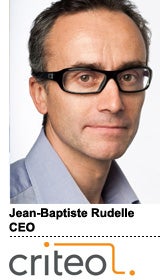
“We’ve been upfront about the costs and impact on revenue growth this year,” Criteo CEO JB Rudelle told AdExchanger. “We’re conducting a business transformation and we should start to see results next year.”
By the end of next year, Criteo expects to see double-digit growth.
With a self-serve platform, Criteo has an entry point to agencies, Rudelle said.
“Historically, we haven’t worked a lot with agencies as a managed service,” he said. “With a self-service platform, agencies can build value on top of it.”
The company’s newer suite of products include audience matching with Criteo’s shopper graph and tech that’s come via acquisitions like HookLogic’s sponsored product ads and the retail shopper marketing business Storetail it bought this year. Criteo also announced on Wednesday that it had bought Manage, an app-install advertising startup, for an undisclosed amount.
Those products account for 7% of Criteo’s overall revenue, though they’re outpacing the growth of its core retargeting.

Criteo’s general in-app revenue grew 60% year-over-year, Rudelle said. And app-installs should go from a negligible part of revenue to a scalable product once Manage has been integrated, he said.
Mobile is also a priority because data like device IDs, location and operating systems are critical to fill out its shopper graph.
“People have said we’re too cookie dependent, so as we expand to the in-app world we’re organically expanding from any reliance on cookies,” Rudelle said.
Criteo’s revenue also dropped because it was limited in retargeting Safari browsers – a change now baked into its guidance.
A GDPR violation could in theory be crippling, but changing policies from mobile operating systems and browser operators (i.e. Google and Apple) cut more directly at Criteo’s bottom line.
Criteo is also fending off a concerted push into the retargeting category from Google and Amazon.
“It comes back to the question of ‘What is retargeting?’” Rudelle said about those two platforms’ renewed interest in the space. “For some time it’s been interpreted in a very narrow way but at heart it’s about how you leverage data.”









