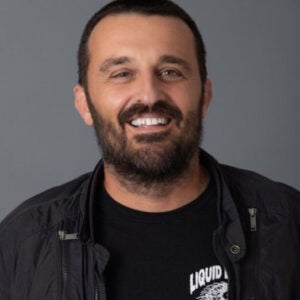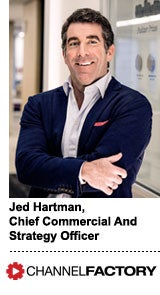
The Washington Post’s former chief revenue officer, Jed Hartman, has landed at Channel Factory, which uses video AI to help brands curate their YouTube buys for better brand safety and contextual relevance.
For Hartman – whose departure from the Post was left unexplained – the new role as chief commercial and strategy officer fulfills a longtime dream to work on the tech side of the media and advertising business.
“I’ve always had a bug to work for a late-stage startup, and I’ve had a hint of jealousy when I’d hear about these exciting young startups,” Hartman said.
Channel Factory, which is profitable and needed seasoned leadership to grow to the next level, seemed like a perfect match. He joined in May.
Channel Factory uses its video AI tech to curate YouTube videos for its clients, which include Sony, Bridgestone and Live Nation. They can then activate on YouTube themselves or let Channel Factory buy the videos for them. It also has relationships with creators who collectively have 15 billion views. Channel Factory gets special access to data from those creators, allowing them to pull insights about content to help their clients.
Hartman talked to AdExchanger about his move.

AdExchanger: How is your experience at The Washington Post influencing what you’re doing at Channel Factory?
JED HARTMAN: The Washington post piqued my passion for technology in a huge way. It also made me clearly understand that tech can accomplish really anything in the space. I was immersed in tech and fortune enough to have engineers on my team, with RED [WaPo’s research, experimentation and development team], that made me want to get even closer to that space.
The other reason is the dedication to quality content. With Fortune, Time and the Post, I’ve been fortunate to work at quality publishers. But in the new world, with hundreds of thousands of creators, you need technology to extract the right content for clients. In the user-generated content world, technology becomes your editorial process, the arduous task of curating myriad content types.
How does Channel Factory work with brands?
We are a tech and service company in the advertising space working with hundreds of brands. Our tech learns what kind of content our clients want to be around, and what doesn’t suit it. And the tech will reach inside YouTube and put their ads against the content you want to be around. That’s several steps past brand safety.
Companies that have built their business on the back of a single platform often have unhappy endings, including multichannel networks like Maker. Did that give you pause?
Platforms are remarkably powerful throughout the ecosystem, and yes, we are uniquely dedicated to one of them. But someone could lean up against a light switch at Facebook and change your revenue mix. Platforms are powerful, full stop.
There is plenty of opportunity in the one platform we’re on. And we’re a nimble, small tech company. If there is a pivot needed, that’s very much in the DNA. We have to focus on plan A right now, and if there is a necessity to be nimble in the future, so be it. We see a huge opportunity right now to be a partner to clients and to Google.
What have you been focusing on most after the past few months?
I spent my early months learning and listening. YouTube is incredibly complex, and you add tech on that, and it adds another dimension. I’ve been getting talent into the organization and getting the marketing and training right.
Can you share any insight into why you left The Washington Post?
I had a wonderful time at The Washington Post – the learnings, fun and success was fantastic, and I’m really excited about the next chapter. I credit my time at the Post for developing my passion, confidence and reasonable understanding of tech. I have nothing but wonderful, fond memories of The Washington Post.
This interview has been condensed and edited.