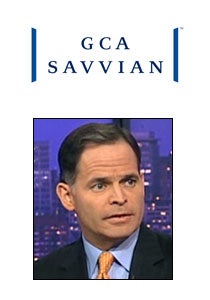
 Terence Kawaja is Managing Director of GCA Savvian, an investment bank, which “acted as exclusive financial advisor to Invite Media, Inc. and assisted in the negotiations” between Google and Invite Media. Google acquired Invite Media last week.
AdExchanger.com: Why do you think Google bought Invite Media?
TK: I will let Google answer that but Invite had many excellent qualities from a world-class team (yes despite the fact they are recently out of college), a very user-friendly and leading technology and a great set of growing agency relationships.
Some commentators have suggested that the Invite Media deal may set a cap on the value of a demand-side platform (DSP), not dissimilar to what happened with Teracent in the creative optimization space. Do you agree?
I have heard the Teracent hypothesis but think that this situation is different in several respects. Firstly, the valuation of Invite (which has been understated in the press) worked since they had attained a strong market position very efficiently – they raised less than $5 million in capital. Second, the DSP process is probably more complicated and is less easily replicated. Third, several successful DSPs have created sticky agency relationships that go beyond the algorithm that contribute to longer-term value.
Can you disclose the actual sale price for Invite?

No.
Please discuss how DSPs in the space today are differentiating from what some claim can be built quickly and easily?
As you know, not all DSPs are the same. Some focus on workflow and UI, some are building next generation algorithms, others are really infrastructure plays and other still are doing everything from the media buying to the data optimization using predictive analytics. So really, the only thing they have in common is that they are all using data to optimize the buying of exchange-traded media. Several ad networks have built this same capability – now we will see if they want to shift their business model to a percentage fee-based approach.
How long did it take for this deal to come together? Is there an average time – what are the factors?
Invite Media was approached in the past but talks did not conclude. Meanwhile the business was growing at mid double-digit monthly rates and there was no need to do anything. They were then approached by several parties this year and were able to conclude terms with Google. We made zero outbound calls. The deal took several months in order to do all the diligence and documentation – and Google is very thorough. Deal timing depends on the situation. Besides the sale of Invite Media, we closed another deal last week that went from term sheet to close in under a month.
You have been predicting a consolidation wave. Is that just wishful thinking or do you really think we will see more activity?
Given the current state of fragmentation coupled with the accelerated dynamics of the sector, I do see more M&A activity. With fragmentation comes opportunity and I think several players will take advantage of that and pursue inorganic growth options. If we are at an inflection point (and it feels like we are), the upside for buy vs. build is compelling. To be clear, if you think of consolidation as fewer players, that can come about two ways: (i) M&A and (ii) failure. With over $2.5 billion of VC capital raised in the display sector, failure is an option.
What do you think about the market for DSP M&A?
Like most markets, the key thing to examine is the balance of supply and demand. On the supply, there are new companies announcing DSP-like capabilities every week but there are only a handful of them which have meaningful traction with advertisers and agencies. On the demand, there are many companies from at least six different potential buyer groups with potential interest: (i) Agency, (ii) Media/Marketing, (iii) Network, (iv) Data and Measurement, (v) Software and (vi) Ad Network. I have spoken with 44 companies (that I could count) that have expressed a genuine interest in the category. Clearly not all will step up. One has to factor in many different considerations such as strategic objectives, ability to pay, etc. to figure out what the opportunity looks like and the right match-ups. It’s like game theory.
Assuming you’ve mapped this out, can you share your views?
I have mapped out various scenarios and have a running template I use to help me think about the landscape – like those WWII movies with the miniature battlefield models. That we keep for our clients.
Who do you think is next to get acquired?
(smile) That will certainly be a key discussion topic at our Digital Media Summit we are hosting tomorrow which includes most of the CEOs in the sector.

Follow Terence Kawaja (@tkawaja) and AdExchanger.com (@adexchanger) on Twitter.