Why should celebrities lend their influence to other brands when they can spin up their own?
But for entertainers to launch their own direct-to-consumer products, they need help to understand their social fanbases and turn them into paying customers.
For instance, when Kate Walsh – star of “Grey’s Anatomy” spinoff “Private Practice” – relaunched her perfume brand Boyfriend in 2017 using a direct-to-consumer business model, she enlisted the social media agency Digital Media Management (DMM).
As social has become a more commerce-driven channel, DMM decided to expand its focus and help entrepreneurial celebrities start new businesses.
Using a playbook of techniques popularized by direct-to-consumer brands, the revived Boyfriend brand grew sales 1,238% year-over-year.
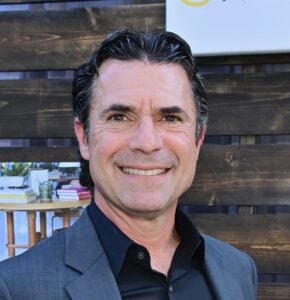
“The DTC trend is another way for our clients to leverage social media,” said agency founder and CEO Luigi Picarazzi.
When Walsh first tried to build a perfume line 10 years ago, she put the product on hiatus, partially because she didn’t have the proper support to nurture the brand. The perfume was focused on retail distribution instead of a direct-to-consumer model.

Meanwhile, DMM observed that Walsh’s fans were still obsessed with the fragrance, talking about it on social media and even selling it on eBay for hundreds of dollars a bottle. Could they revive the brand using new DTC principles, and handling all the operations for Walsh?
DMM tested the idea by selling a scented candle in 2017, which was less expensive than developing and packaging a new perfume, but could help gauge if fans truly were still interested in a perfume. The candle quickly sold out.
“We can start the process in a way that’s safe, and doesn’t require a lot of investment,” said Melody Hernandez, VP of Boyfriend Perfume and DMM. “With new product extensions, we can test them in low quantities before doubling down.”
After the success of the candle, Walsh reformulated the Boyfriend perfume last year with the help of DMM. The agency handles everything but the manufacturing in house: product development, customer service, operations, fulfillment and branding. The tech for the website is powered by DTC brand favorite Shopify.
To find out what scented products Boyfriend fans wanted next, DMM used a private Facebook group, “Boyfriend Confidential,” as its focus group. A poll asked people to vote on what kind of product they wanted next – like a shampoo or a travel-size perfume. The surprise winner turned out to be a product originally suggested by a fan: a car air freshener.
Based on the customer feedback, DMM developed a car air freshener infused with the Boyfriend perfume scent. Along the way, it asked people in the Facebook group for feedback on the product design and the packaging. The car air freshener has since sold out.
Listening to consumer feedback and tailoring products based on that feedback has become a hallmark of DTC brands. And it also may be why Boyfriend’s been more successful than its follower count may initially suggest.
Many celebrities with big DTC brands have tens of millions of followers – think Kylie Cosmetics, Jessica Alba’s The Honest Company or Rihanna’s new partnership with LVMH for her brand Fenty. Kate Walsh has under 1 million fans on Facebook and Twitter each, and 2.3 million followers on Instagram. But Walsh’s fans are opening their wallets to buy the products, including repeat purchasers of the different Boyfriend-scented items.
“Followers doesn’t mean sales,” Picarazzi said. “We’ve seen celebrities with followers in the tens of millions, and they didn’t convert, because it didn’t connect to the fan base.”
To sell Boyfriend requires an understanding of what channels drive the most sales. Of all the social channels, Instagram performs best. One theory is that the platform – which wasn’t around 10 years ago when Walsh got started on “Grey’s Anatomy” – contains her most recently engaged followers. DMM is also starting to test YouTube as a sales channel.
Beyond social, getting an email address is valuable, because that channel tops conversions, Hernandez said.
Paid marketing is minimal. DMM is doing some paid Facebook marketing. It also gifts products to micro-influencers, steering clear of pay-for-play social posts.
“There is a lot of trust that’s been lost in the beauty space because of influencers and paid posts,” Hernandez said. Boyfriend only wants fans who authentically love its scent to share the perfume with friends on social media.
After proving that Walsh’s biggest fans would return to Boyfriend perfume, DMM is going to venture further outside her follower base to find sales. With the celebrity-neutral name of “Boyfriend,” DMM sees the possibility of creating a bigger brand that will connect with more than just fans of Walsh.
“The second phase is to reach a larger audience, and have a brand that lives on its own,” Picarazzi said.