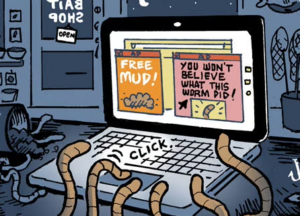
As advertising spend ramps up during Q4, bad actors respond in kind.
Attracted by increased ad budget, fraudsters hide their chicanery within the burst of year-end marketing activity.
And shorter campaign flights during the holidays mean advertisers don’t have time to check for weird patterns or increased bot activity.
“If you’re running a campaign over six months, you can monitor it weekly to detect spikes in fraud or things that look suspicious,” said Reid Tatoris, VP of product marketing and outreach at Distil Networks. “But if you’re doing a big Christmas blitz and you’re spending a ton of money very quickly, there isn’t always time to get into the details until it’s too late to do anything.”
And always-on anti-fraud systems aren’t “geared to switch over and refresh in real time to handle something like the Q4 phenomenon,” said Piyush Shah, chief product officer at mobile ad network InMobi.
“To be honest, we don’t necessarily upgrade our system to handle high and low volumes and the sophistication in fraud tactics that come in because of that,” Shah said.
Which leaves the door wide open for wolves in Santa suits. White Ops estimates advertisers were bilked to the tune of around $3.1 billion during Q4 2016, a number the company expects will hit $3.5 billion this year.
But it’s not just during the holiday budget dump when advertisers find themselves exposed. Fraudsters are on high alert anytime there’s an jump in the demand for traffic.

During Singles Day in China on Nov. 11, for example, there was a noticeable increase in the amount of fraudulent traffic detected by InMobi’s systems. The company blocked somewhere between 20% and 25% of traffic coming into its platform, far higher than normal.
New Year Resolutions
But there are things advertisers can do to defend themselves. One is to buy smart.
If the top campaign KPI is fill rate and the inventory doesn’t exist, someone will rise up to fill that demand – and it’s often the bad guys, Tatoris said. It’s worth paying the upgraded price of quality inventory and real traffic, he said.
While no deal can be direct, advertisers should understand the provenance of the inventory they’re buying. Ads.txt should help with that.
“If an impression has been bought and sold five different times, it’s more likely a bad guy is going to try and get in the middle of that stream,” Tatoris said.
It’s also a good idea to pay closer attention to shorter campaigns in the moment despite being busy during times of seasonal hubbub.
“If you have a two-week campaign, evaluate it on a more frequent basis, look at the increase in spend compared to performance,” Tatoris said. “Fix what you can, and if there’s a problem you can’t solve in a few weeks, put it on the calendar for January.”
But even if there isn’t an obvious problem, an end-of-year review provides perspective. Early January is a great time for self-reflection, but not everyone does it, said Michael Tiffany, president and co-founder of White Ops.
“Go over the traffic quality problems you had in 2017 and their resolution, check to see if your volumes of fraud actually went down,” Tiffany said. “If a publisher has a problem, supposedly fixed the problem and is still generating the same amount of volume, ask the question, ‘How?’”
And then there’s some advice that should be taken all year round, liking keeping an eye out for anomalies, Shah said.
If an app-install campaign is generating downloads from geos other than the ones specified, that’s a red flag. If the number of people watching a video to completion suddenly improves for no apparent reason, something fishy is probably going on.
“There’s been more scrutiny from performance advertisers this year and we like it,” Shah said. “Clients, especially the larger ones, are getting savvier, as we’ve seen with Uber’s lawsuit against its agency. That was a watershed moment, and now more performance advertisers are taking notice and starting to question the metrics they’re seeing with their ad partners.”