AI In Q4: What Worked, What Didn’t And What’s Next
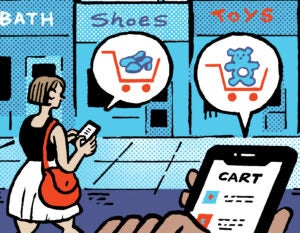
Not every retailer has a solid handle on emerging AI tech. While some thrived, others stumbled – sometimes spectacularly. Here are some lessons to learn from Q4 campaigns.

For over a year now, audiences have been changing channels (pun intended).
In today’s day and age, a robust healthcare media mix covers a variety of channels, including television, digital, social media, audio, out-of-home and others, all dedicated to one goal: targeting the right audience at the right time with the right message.
According to Emarketer, global ad spending surpassed $1 trillion for the first time ever last year, growing at a rate of 9.5%. That growth is expected to continue in 2025, with digital platforms capturing 72.9% of total ad revenues this year, rising to 76.8% by 2029.
Experimentation has been proven to offer unrivaled insights into marketing effectiveness, but it remains underused. But what can organizations do to successfully integrate experimentation into their measurement frameworks?
Understanding advertising effectiveness is the cornerstone of successful marketing, yet marketers often shy away from the most reliable tools for the job.
As we navigate the challenges facing our industry, we must prioritize both efficiency and integrity – and focus on quality over quantity in ad delivery.
The industry’s sharpest minds claim we are entering the Outcomes Era of digital advertising. But we have been in the Outcomes Era for over a decade. It is high time to embrace the Quality Era, instead.
Under the new leadership, the FTC is signaling a pivot away from sweeping rulemaking efforts to let Congress play that role, writes Uplevel CEO Raashee Gupta Erry.
Navigating the world of data and identity partners can feel like scrolling through a dating app: In a sea of options, only a few are worthy of swiping right. To find your perfect match, look for a partner who checks all the right boxes.
Meta and Mozilla’s new browser-based attribution system for web ads appears to solve an interesting math problem. But if applied to real-world advertising, it will increase privacy risks for users, writes Raptive’s Don Marti.
The pace of AI innovation in 2025 is staggering. New models and capabilities emerge weekly, each promising to be transformative. PwC predicts AI will add $15.7 trillion to global GDP by 2030, a 14% boost to the world economy. Goldman Sachs projects $200 billion in AI investment in 2025 alone.
Agents are autonomous and thoughtful, incredibly fast and knowledgeable. They won’t replace star performers, but they will supercharge your team’s delivery.
The first half of this decade has left publishers reeling from a pandemic jab and an AI uppercut that rearranged our reality and knocked us to our knees. Here’s how pubs and their ad tech partners can punch back in the years ahead.
The existing CPM model is broken. In what other industry would we accept paying full price for a product that delivers less than half of what was promised, asks Raphael Rivilla, chief media officer at Marcus Thomas.
Under the guise of preventing “censorship,” Jim Jordan and the FCC’s Brendan Carr are attacking the First Amendment rights of private companies to choose what kinds of political content they support.
Today, AI is being used in CTV for a variety of machine learning applications. But in the future, AI will drive an unprecedented level of personalization. In this interview at CES 2025, LG Ad Solutions CTO Dave Rudnick talks about the division’s new “moonshot” unit, Innovation Labs, and more ways technology is transforming the streaming […]
Nielsen’s Matt Devitt, head of advertisers and agencies, discusses the biggest changes in how advertisers and agencies are buying TV.
Nineteen states have passed comprehensive privacy laws, but how close are we really to a federal privacy law?
There can be little doubt that marketing mix modeling (MMM) is having a moment. With the death of the cookie and increasing data privacy concerns from consumers, marketers are seeking alternatives to degrading multi-touch attribution (MTA) systems. However, as this moment unfolds, I’ve realized something critical: Understanding of marketing mix modeling solutions is woefully out of date. The industry has been stuck in a time warp, and marketers need to understand what’s changed to avoid settling for less.
Tom Pachys, Co-founder and CEO of EX.CO, discusses the company’s new expanded ad server, and how it sets the offering sets them apart from other ad tech companies.
Complexity is going to create new opportunities to reach audiences, says Nielsen Chief Marketing Officer Alison Gensheimer. She sits down with AdExchanger Executive Editor Sarah Sluis to discuss how Nielsen can observe nuanced behavioral differences in streaming behavior, and how brands can use this data in order to reach their audiences more effectively.
What is the future of curation in 2025? On the CES conference floor, PubMatic Chief Revenue Officer Kyle Dozeman talks about why curation is such a hot topic in ad tech.
As we move into 2025 and beyond, there are a few areas where President-elect Donald Trump’s policy proposals will directly affect the advertising industry, writes Eric Haggstrom of Advertiser Perceptions.
Back in 1966, McKinsey astutely observed, “Change gets costlier every day, yet not changing can be costlier still.” This statement rings truer than ever in today’s rapidly evolving advertising landscape.
Generative AI is quickly becoming the bedrock of the digital advertising landscape.
That might sound like a bold statement—after all, generative AI only hit the mainstream two years ago. But while many industries are just beginning to explore the potential of generative AI, advertisers have been leveraging AI and machine learning for years.
In 2025, connected TV (CTV) will revolutionize advertising yet again, offering marketers a blend of massive reach and performance-driven results. Its power to connect broad audiences with lower-funnel impact makes it the ultimate game-changer in modern marketing.
The in-game advertising market’s stagnation is both unsurprising and frustrating. The onus is on the gaming industry to make gaming an essential channel for advertisers, rather than a nice-to-have.
Two perspectives have emerged on curation: The value argument highlights refined audience targeting, while the ad network argument emphasizes enabling smaller players to compete with scaled giants.
Success with Gen Z isn’t about the stories brands want to tell – it’s about tapping into their stories and aligning with how they live and express themselves. That’s where the PPCCs framework comes in.
The customer journey is complex, with consumers interacting across 20+ channels and exposed to 4,000-10,000 ads daily before making a purchase. This fragmented landscape challenges advertisers to effectively measure impact across touchpoints to understand: How do marketing efforts across all stages of the customer journey contribute to overall business outcomes?