LinkedIn’s B2B Audiences Are Now Available On CTV Via Google DV360
LinkedIn is plugging its professional data into Google’s ad buying platform so that advertisers can use job titles and company info to target streaming ads programmatically.

LinkedIn is plugging its professional data into Google’s ad buying platform so that advertisers can use job titles and company info to target streaming ads programmatically.

By all means, measure outcomes. Optimize toward sales. Make television more accountable. But if the product is basically a pixel, an attribution window and a CPA column, that doesn’t mean we’ve transformed TV into Google.

Xbox gets into the TV biz; Meta is testing a new monetization model; and who wants to be a hold, anyway?

Against the backdrop of Advertising Week New York this week, the programmatic ecosystem has been buzzing madly like the inhabitants of an overturned beehive after the release of Apple’s iOS 27.

An AI agent can stay inside its budget and still spend too much. It can log every decision. But the evidence of performance can still arrive after the money is committed.

The assumption that an impression is a reasonable proxy for consumption is eroding, and when buyers stop believing it, pricing follows.

Most brands have a YouTube presence. Far fewer have a YouTube strategy, according to veteran marketer Norm de Greve, who recently joined the board at Pixability.

Agencies are differentiating their tech stacks by building custom agentic AI tools for their clients. And they’re rethinking owning those AI tools – particularly since licensing them creates new revenue streams.

AppLovin sues Unity over data leakage; Meta’s creator business faces an uphill battle in competing with YouTube; and AI search wrongly blames Converse’s old CMO for its current ad controversy.

The Trade Desk is unable to serve ads to the Safari browser for Apple device owners that have downloaded iOS 27. Apple has been investigating the issue since last week.

Amazon Ads has overhauled its DSP and the sponsored product and search-based ad console for on-platform ads, the company announced at its unBoxed event in San Francisco on Tuesday.

The agentification of Amazon Ads is underway. At its unBoxed ads industry event in San Francisco on Tuesday, Amazon announced a major ad tech overhaul, with its DSP turning into a default agentic chatbot experience.

Advertisers can now buy YouTube Shorts ads alongside open web inventory; Meta just wants to be wanted; and Meta’s Muse shows the danger of blindly trusting AI agents.

California protects an individual’s right to sue when a company violates data privacy law. So privacy compliance means understanding what a jury of consumers will tolerate.

How legit is “annualized revenue run rate” as a metric?; YouTube discusses new creator marketplace tools; and AI agents keep bypassing safeguards.

As programmatic buying becomes more common in audio, marketers and platforms fight the temptation to cram in as many placements as possible.

Given how much the market has changed since the Google trial began, and the wiggle room in the ruling itself, publishers aren’t expecting much relief from the court’s behavioral remedies.

Indie agency KWG says sell-side curation can target more high-performing inventory with better match rates and lower data fees than buy-side curation.

A week ago, HBO MAX had its verified Reddit account overrun by a hacker group, which eluded notice for two days while it ran 108 different ad permutations targeting an unknown number of Redditors.

When a creator already loves the product they’re marketing, it’s easy to work it into their content in ways that feel natural. That’s exactly what the Try Guys did.

The court has unsealed Judge Leonie Brinkema’s full remedies opinion in US v. Google (ad tech edition). So, what’s in there?

Where teens were once swept into the same cohort as 18-34, brands will have to have separate strategies and tactics to engage them. And this shift comes just as Gen Alpha comes of age.

Google tests out a “pay per value” AI licensing scheme; Netflix, Amazon and YouTube join forces; and Apple may soon launch integrations with third-party LLMs.
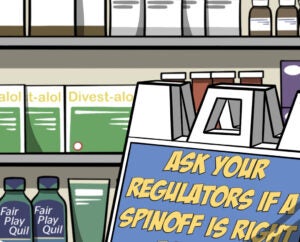
After Judge Brinkema declined to order a Google breakup, ad tech leaders weigh in on how the FTC should approach its case against Amazon.

The Trade Desk is less than a third as valuable as it was a year ago. It retains about one-tenth of its high-water market cap from December 2024, when the company was worth almost $70 billion. Why did investors lose the faith?
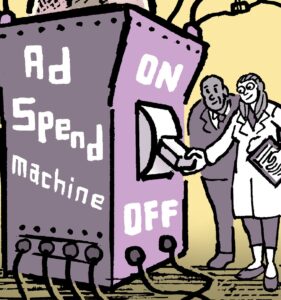
The IAB raises its forecast for ad spend growth; Google continues to develop Meridian, its open-source MMM tool; and Partiful is still learning how to monetize.

Showing up in AI search is top of mind for advertisers. But it’s hard to know how to do it, especially when best practices seem to be changing every day.

TikTok users can now include polls and videos in comments; vertical video app Shortical introduces AI ads; and Meta’s upcoming personal agent may cause more problems than solutions.

Buy-side experts said it’s another example of a Big Tech platform taking advantage of the lack of transparency built into programmatic ad auctions. And they’re not optimistic change is coming.

Google will not be required to break up its ad tech business, despite a federal court ruling last April that found the company operated a monopoly.

Why does the buy side remain so smitten with handing control to autonomous systems owned by companies whose economic interests are not its own?

OptimizeRx, which has software that plugs into the systems doctors use to prescribe drugs and maintain patient records, has taken its next big step into the world of programmatic through a new partnership with The Trade Desk.

If AI agents can plan and buy media, who needs a holding company? Good question. It came up during Omnicom’s Q3 earnings on Thursday.

Netflix’s revenue grew 12% YOY to $12.9 billion in Q3, which it maintains is in line with its forecast. Its ads business, however, is lagging slightly compared with expectations, causing Netflix to tweak its forecast for the rest of the year.


Apple is coming for identity resolution. WebKit’s latest tracking crackdown targets the infrastructure behind post-cookie IDs – and switching to a first-party setup won’t necessarily spare vendors.

Advertising supply chain intelligence company DecryptAds uncovered more than 2,100 AI-generated recipe sites that are monetized with programmatic ads and feature fabricated author profiles.

Most brands and businesses are trying to figure out how to improve their metrics when it comes to AI – and also what those metrics even are.