

 Sorry Snapchat, Facebook isn’t going to quit.
At Facebook’s F8 developer conference in San Jose on Tuesday, Mark Zuckerberg declared that Facebook is all-in on augmented reality.
In fact, AR is a cornerstone of Facebook’s 10-year road map.
But for AR to really go mainstream, it needs to evolve beyond selfie masks and rainbow vomit – and developers need an open platform to play around in.
Which is why Facebook announced that it’s rolling out closed beta access to its Camera Effects platform, which gives developers the ability to create their own filters and frames. Developers will also be able to tap into the same location data powering Facebook, Instagram and Messenger experiences.
A second tool, Frame Studio, allows anyone to create their own static frames.
“A lot of people look at this stuff and it seems so basic – maybe this is just what kids are into doing these days,” Zuckerberg said. “But we look at this and see something different. We see the beginning of a new platform.”
A new platform that’s angling to eat Snapchat’s lunch with relish.
And now that Facebook has spent a year methodically appropriating Snapchat-like features, it’s taking a different philosophical approach than its smaller competitor.

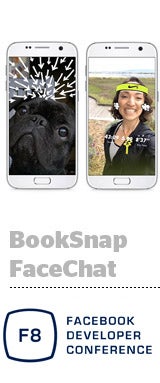 By opening its platform to developers, Facebook is looking for scale. The more filters and AR experiences Facebook has on its platform, the stickier the overall experience gets – and Facebook doesn’t have to do all the heavy lifting and development work on its own.
Developers can’t create their own lenses and filters on Snapchat. And most brand-sponsored filters on the platform are one-offs that revolve around specific events, like the release of “The Peanuts Movie” or the ability to pour Gatorade over your head during the Super Bowl.
Facebook wants to own the everyday, to encourage people to pepper their daily photos with animated objects and three-dimensional text, to play AR games (coming later this year), to share superimposed stats in a running app, to turn their house into Hogwarts for their Harry Potter-loving daughter’s birthday party (Zuckerberg’s example).
As the line between the physical and digital worlds blur, brands can insinuate themselves into that blended experience in subtle ways.
“Think about all the things you have in life that don’t need to be physical,” Zuckerberg said. “We’re all about extending the physical world online.”
Snapchat isn’t sitting still, though. On Tuesday, just around the same time Zuckerberg was taking the stage at F8, Snapchat announced its own new features that allow users to add 3-D cartoon objects into pictures and images. OMG.
But Zuck shrugs.
“I’m confident that we’re going to lead with augmented reality,” he said.
 The filters admittedly look cool and make communication on the platform more interactive, but what about the business use cases? Although it’s still early, there are examples of how brands could take advantage.
Some are fun, some are useful.
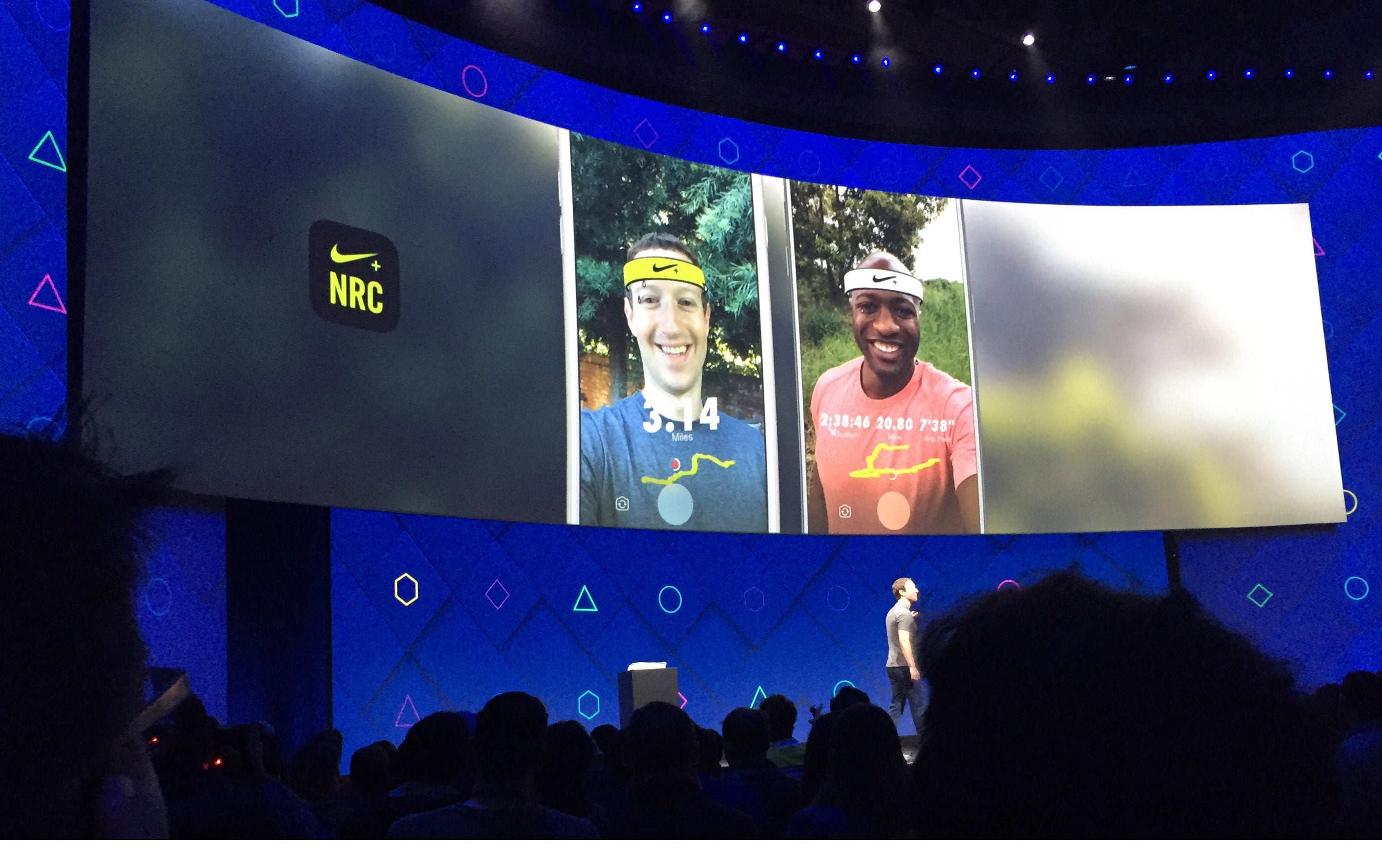
Nike, for example, partnered with Facebook on a filter that allows people to overlay branded sweatbands on their forehead via the Nike+ Run Club app, which has more than 58 million downloads.
Or imagine a product photo, say a bottle of wine on a table or tube of lipstick in someone’s hand. A brand, or a user for that matter, could overlay ratings, reviews and maybe even a link to buy it online.
“We’re going to make the camera the first mainstream augmented reality platform,” said Zuckerberg, as he demonstrated on a jumbo screen behind him what it would look like to add 3-D moving objects to static images, like a bunch of animated sharks circling around a cereal bowl (for some reason). “As silly as effects might seem, they’re meaningful because they give us the ability to share what matter to us on a daily basis.”







