
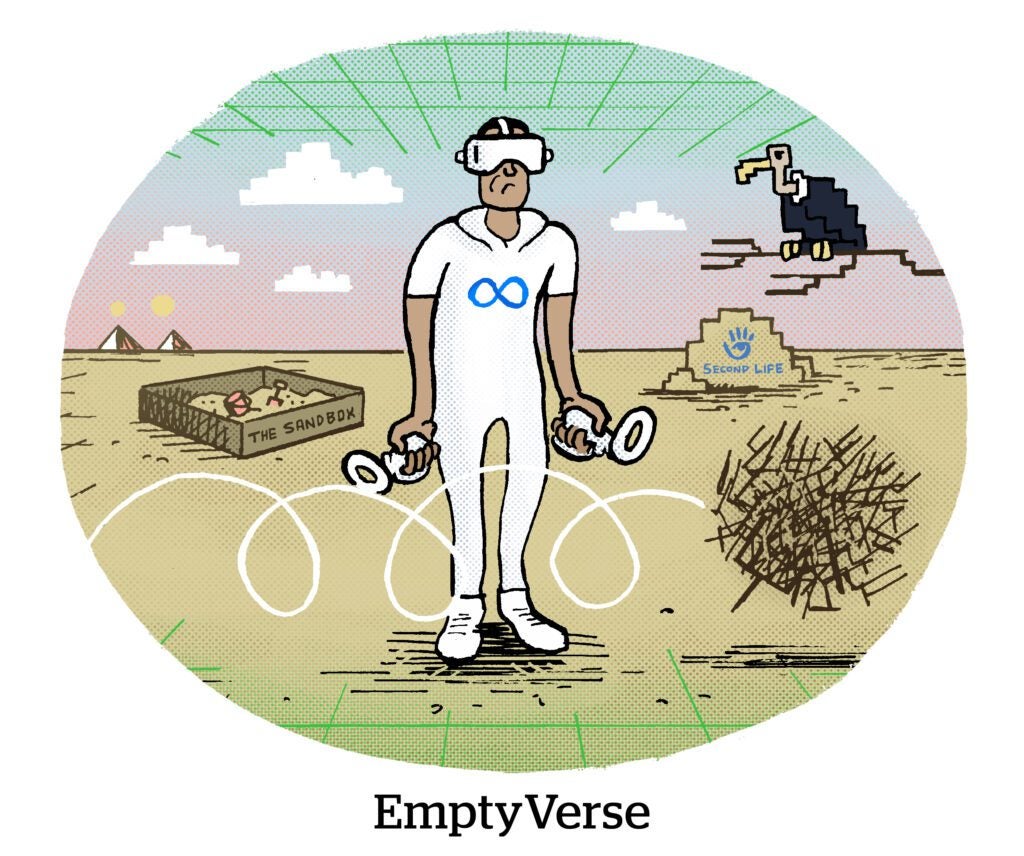
In some regards, it’s been a rough year for Meta.
It’s been hit with a number of major lawsuits, including a multistate action over the harmful effects of social media on children, resulting in an $18 billion settlement. Another suit regarding misleading users on data privacy resulted in the judge ordering Meta to pay the state of New Mexico $25 billion in penalties. The latter order came mere hours before Meta’s third quarter earnings call on Wednesday. (Meta is appealing the decision.)
Nevertheless, Meta had a strong Q3, all things considered.
Revenue for its family of apps was up 26% year over year to $64.2 billion, $63.1 billion of which came from ad revenue. Ad impressions were also up by 10%.
And Meta provided plenty of updates on how its Muse personal AI assistant ties into its ever-growing advertising business.
Something to Muse on
Meta’s earnings calls have been dominated by its AI ambitions for at least the past two years. But, at its heart, Meta is an advertising company, even more than it’s an AI company.
So, naturally, Muse has an advertising arm.
A few weeks after Muse’s initial launch in early September, Meta unveiled Muse for Small Business. It’s “a new set of new skills and connectors” in the Muse app that helps businesses find new customers, analyze ad performance, optimize ads and draft campaigns, Meta CFO Susan Li told investors.
On the consumer side, the Muse launch was one of the company’s “most successful launches ever,” said Meta CEO Mark Zuckerberg – a debatable sentiment, considering the host of privacy concerns around early versions of the model.
But much like Meta’s other platforms, privacy concerns haven’t hindered adoption.
Since Muse’s launch, over 10 million people in the US and Canada have set up a personal agent, and about 25% of those people use it on any given day.
However, all those agents are “very compute intensive to run,” said Zuckerberg. Meta expects its cost efficiency to improve by 10x over the next year, which “which will enable it to be profitable once the revenue lines are at scale,” according to Zuckerberg.
Which is to say: For now, Muse might be popular, but it’s not making money.
AIs on the prize
So, if Meta’s increase in ad revenue can’t be attributed to Muse, then what’s responsible?
The answer is still AI, which has been central to Meta’s overarching ad platform strategy for a while now.
Earlier this year, Meta launched its Generative Recommender, an LLM-powered tool that analyzes ad content and user preferences to determine the best ad to serve a given person. Targeted audience segments have seen a nearly 2% increase in conversions since the tool was launched on Facebook feeds, said Li.
Meta also expanded GEM, its generative ad recommendation model, to unify recommendation data across different platforms in one place. This capability resulted in a 1.7% increase in conversions for off-site campaigns and a 9.6% increase in in-app conversions this past quarter.
AI investments have been benefiting Meta’s ads business for years, said Li. As LLMs become the foundation of more AI infrastructure, she added, Meta will have more insight into “people’s preferences [and] what they’re interested in, both across organic content and recommendations.”
The goal is to not only fuel Meta’s Advantage+ ad optimization engine, but also Meta’s creative personalization features. Third-party ad tech and human creatives beware.