

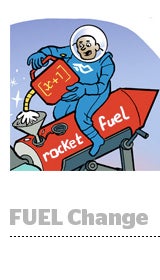
 Rocket Fuel appears to be bracing for a chilly wind, at least when it comes to the insertion order-based media sales business that has been the core of its revenue engine for the past several years.
The programmatic platform company reported Q4 revenues of $139.5 million, a 63% lift compared to Q4 2013. That’s a slowdown from quarters past, and slightly below the midpoint of Rocket Fuel’s prior guidance.
CEO George John told investors the company will practice more discipline in its hiring and capital expenditures as it pushes for profitability. Both head count and expenditures will be capped at about 10% growth in 2015, as the company seeks to build a more stable business.
With less hiring, John said, “Our managers can now focus on goal setting, coaching and helping teams focus on efficient processes.”

“We’re evolving from maximum growth to more disciplined growth with profitability in mind,” he added. “We’re shifting a significant portion of our sales energy from going after I/O’s with the media agencies to working more with agencies as a whole to do longer-term deals. … We’re trading off what might have been higher revenues, but revenues with fluctuation, to higher-quality revenues with more stability. That’s exactly our strategy for 2015.”
Rocket Fuel’s shift to software sales has been helped along by its Q4 acquisition of demand-side and data-management platform provider [x+1]. Such sales are characterized by longer sales cycles at higher levels of the advertiser or agency organization. Previously, he said, Rocket Fuel had focused its efforts on media planners and buyers responsible for a single client, but the market is moving away from that model.
While the company has scored some wins, including a committed spend deal in the “high mid-seven figures” with a top-five holding company, John said, “Our sales productivity and operating leverage are not where we think they should be, nor do they reflect the value our platform is delivering.”
On the bright side, the company is growing rapidly in emerging channels. Rocket Fuel’s Q4 revenue included $57 million from mobile, social and video channels, an increase of 108% from the year-ago period.








