

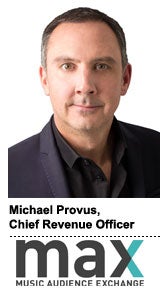
Music Audience Exchange (MAX), a service/tech platform that uses data to pair up-and-coming musical artists with brands, reached into the publishing world to hire Michael Provus as its Chief Revenue Officer late last December.
Provus previously held the same title at Wenner Media.
MAX connects upstart musicians with brands whose customers listen to the artist’s style and genre of music.
For example, Ford used MAX’s influencer marketing platform to find out that fans of country rock musician Brantley Gilbert indexed highly with its target audience for its F-150 truck.
Provus hopes to sell MAX’s value prop to more brand clients – many of whom purchased Rolling Stone’s advertising from him at his previous gig.
While at Rolling Stone, Provus relied on the editors’ expertise to match brands with artists, but he said, they were missing the data.
By contrast, MAX’s planning platform shows what artists and musical styles rank highly with a brand’s audience, or they can browse data-generated segments like “Ambicultural Hispanics,” “Indie Songwriters for Women” or “Gen X Electronic.” (Eventually, MAX may license out this platform to others.)

MAX’s data comes from a number of sources. It collects proprietary data about fans’ musical and product tastes from long-form surveys given out by artist fan clubs and commissions the same surveys, and uses those results to model fans’ consumption patterns. It also uses aggregators to get streaming data and analyzes social media to gauge fans’ product tastes.
MAX hopes this data will give brands the confidence to work with smaller musical acts, where they can get better rates compared to working with established artists. Meanwhile, smaller artists benefit from the exposure they get when their songs are featured in a paid media push.
Once a client picks an artist to work with, MAX will produce a short branded video, which often appears on YouTube, featuring the artist and the product. The artist promotes them on social media. MAX also creates audio ads on Pandora and Spotify where the artist will thank the brand for promoting or sponsoring their new song. And they’ll have a presence at the band’s concerts.
MAX’s data-driven strategy helps brands pick musicians who are about to go on tour, or “in cycle,” giving those brands an additional touchpoint to connect with fans and do experiential marketing.
“Brands get the KPIs and ROI that they need, and artists see a lift in streams and better attendance at their shows. It’s a win-win,” said Provus.
MAX touts that its use of data and smaller artists fosters more authentic sponsorships, which in turn drive results. Renewal rates top 90%, Provus said.
MAX’s technology is gaining speed as many brands are spending more with mid-tail and long-tail influencers, Provus left Rolling Stone, and brands have, too, opting for the places where they can lower costs and improve performance in a less saturated environment. With Provus leading sales, MA X will be pushing even more of those brands to consider smaller artists to deliver their brand message.









