

 CBS Interactive-owned CNET has long relied on data to make editorial decisions. But its branded content program, Studio 61, also applies editorial insights to branded content.
When Motorola wanted branded content to support its Moto Z phone launch, CNET analyzed which content performed best against Motorola’s target segment: Verizon and Android users aged 18 to 34. Those users showed the most interest in content around mobile accessories, applications and video games.
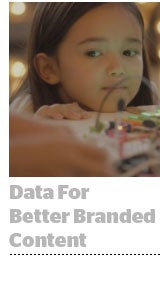
So CNET designed a six-episode branded content series about the “modular life.” The series, which launched in August, focuses on modularity, with videos featuring a video game controller with swappable parts, magnetic building toys for kids and industrial design. Motorola’s new Moto Z phone possessed some of the same functions, allowing for brand alignment.
CNET places the videos prominently on its sites, and increasingly on social media. “The social distribution model is way more prominent than even just a year ago,” said Katie Kulik, global SVP of ad sales for CBS Interactive.
Motorola is ultimately gunning for sales – its biggest metric, said Motorola CMO Jan Huckfeldt via email. “But of course we look at overall performance and engagement. We love when consumers find our content relevant, entertaining and unexpected.”
Kulik finds that adding branded content to a program changes the conversations CNET has with brands. “Instead of a transactional conversation about ad inventory, it becomes about the marketer’s business, their KPIs and how to be creative to hit those numbers.”

As CNET continues to refine its branded content program, Kulik is considering changing its pricing model from CPM to CPV, which other publications have done recently.
CPV is increasingly how marketers evaluate ROI. “I don’t want the pricing structure to be a roadblock to partnering,” Kulik said.
Unlike its peers, CNET doesn’t think branded content will replace display, since many brands buy both at the same time.
This tendency might be specific to the nature of CNET’s publication. After all, it reviews tech products, so banner ads offer a way for brands to influence purchasing decisions, Kulik said.
“Everyone says display is dying,” she said, “but the reality is display isn’t dead – for us, anyway.”








