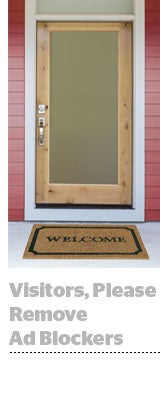
 Publishers thinking about how to deal with the growing rates of ad-blocking users can start by doing something simple: Just ask them to unblock.
Requests to turn off ad blocking resulted in 30-40% of users whitelisting the publisher, according to data shared by GQ (30%), IDG Communications (37% for B2B and 38% for B2C) and Forbes (42.4%), who have experimented with this type of messaging in recent months. Food Innovation Group, which is also running tests, declined to give a specific figure.
But the publishers involved saw significant variations in what kind of asking worked best. Those learnings will affect their future experiments with ad-blocking messaging.
Understand Why People Block Ads
The fact that unblocking rates are in the same ballpark across three publishers suggests that messaging may only work for a certain subsegment of consumers who use ad blockers.
Publishers need to understand why a reader might be blocking ads and tailor their messaging accordingly, said Eric Gillin, head of product for Condé Nast’s Food Innovation Group.
Offensive ad-block users “absolutely hate the ads and ad tech so much they’ll never unblock a site” and fear pixel tracking, he said. With them, messaging just doesn’t work.
Defensive users don’t trust the Internet at large, and have been burned by bad ads like “an endless stream of pop-up ads telling them their computer has been infected,” Gillin said. But those users will unblock individual publications that don’t deliver poor ad experiences.
“You just need to deliver what you promised in terms of a great user experience and valuable content,” Gillin said. “You want to let them know you’re on their side and hear their concerns.”

Plus, as Forbes learned with its ad-blocking experiments, not every user can uninstall an ad blocker. When it ran tests, some of its contributing writers complained they could not check their posts because they were accessing Forbes from corporate networks set up to block all ads.
According to Lewis DVorkin, chief product officer for Forbes Media, it’s working on fixing that problem for its writers. But other readers on ad-blocking corporate networks are out of luck at the moment.
Offer Options
GQ, another Condé Nast brand with a young, male millennial audience, found that ad-blocking users respond best when given a choice, like either whitelisting the site, paying for content or signing up for a newsletter.
“People want to feel like they are in control of the time they spend on the web,” said Mike Hofman, executive digital director of GQ. “Giving people an option of A or B gives them a real feeling that the brand is committed to giving them control of time spent.”
Solely asking users to remove their ad blocker can come off as a “mildly chastising request.”
IDG Communications, whose titles PCMag, Macworld and CIO have a tech-savvy audience, also sees promise in having more choice.
IDG Communications CEO Mike Friedenberg compared ad blocking to Napster, the illegal file-streaming site that proliferated in the early 2000s. Not until iTunes introduced 99-cent songs did consumers have a way to buy a single song without breaking the bank or illegally downloading.
“We are in the stage of Napster,” Friedenberg said. “The media industry is catching up. We have to articulate and educate the market that content isn’t free, and give them options.”
Be Clever! Be Authentic! Be Clear!
Publishers messaging ad-blocking users should showcase their voice while offering a clear call to action.
“Most of our testing was around wording,” Food Innovation Group’s Gillin said. “We found that if you were too clever and not direct enough, users would just close the window without even reading further.”
Evoking the classiness of the GQ brand worked well for the site. “A guy in a suit looking crisp and polished does well for us,” Hofman said, and it’s working on using that message specifically when readers come in through the style channel.
GQ takes its audience into account when developing messaging. Given that “the majority of people we are talking to with this test are millennials, the funny, more irreverent options have also been successful,” Hofman added.
Offer An Ad-Light Experience
After ad-blocking users unblock and are let in, most publishers remove interstitials or other ads they deem interruptive.
“We don’t want Times Square in front of them,” Friedenberg quipped.
GQ avoids intrusive pop-up ads to readers who have unblocked, Hofman said of GQ’s approach. “That stuff is kept away from you. For me, it’s about all of us as publishers being responsible.”
“It’s no secret that the [Forbes] welcome ad is an interruptive experience, and it seemed like a logical thing to try,” DVorkin said of what Forbes has cut out of the ad-light experience. Over the coming months, it will experiment with different combinations of ads to show.
“We need create the kind of consumer experience that will also work for a business,” DVorkin said.