


Creative automation is proving to be just the ticket as StubHub earmarks more of its marketing budget for video.
Historically, StubHub has spent a lot of money successfully on lower-funnel tactics, such as paid search and retargeting, to encourage ticket sales.
But there’s a lot more to performance than simply pointing in the direction of a buy now button, said Sachin Puri, senior director and global head of performance marketing at StubHub.
“We actually get a ton of acquisition through engaging and capturing fan interest and passion, especially if we’re prospecting,” Puri said. “That’s when you want a sizzle reel about the rivalry between the Warriors and the Raptors in the finals or a video about all the fun things happening at Coachella.”
But sizzle reels don’t scale, and you’re not going to ignite fan passion with a “Let’s go, San Francisco!” video if you’re trying to reach people in Canada. Using video as a performance vehicle requires a lot of creative assets.
“We want to create dynamic video targeted to users,” Puri said. “But we don’t have the time to go to the studio to create all of the very specific videos we would need.”
To ramp up its video production, StubHub used Smartly.io, a paid social automation platform whose tools help brands make customizable templates to automate video creation.

Event-related information in StubHub’s marketplace is constantly being tweaked and updated.
Team standings, venue switches, show start times – it’s all in flux, said Brad Roslyn, who works on the performance marketing team at StubHub and manages the relationship with Smartly.
“On one side, we have all of these inputs going into our catalog that could change at any time,” Roslyn said. “And on the other, we need to remain engaging, hyper relevant and accurate with our messages.”
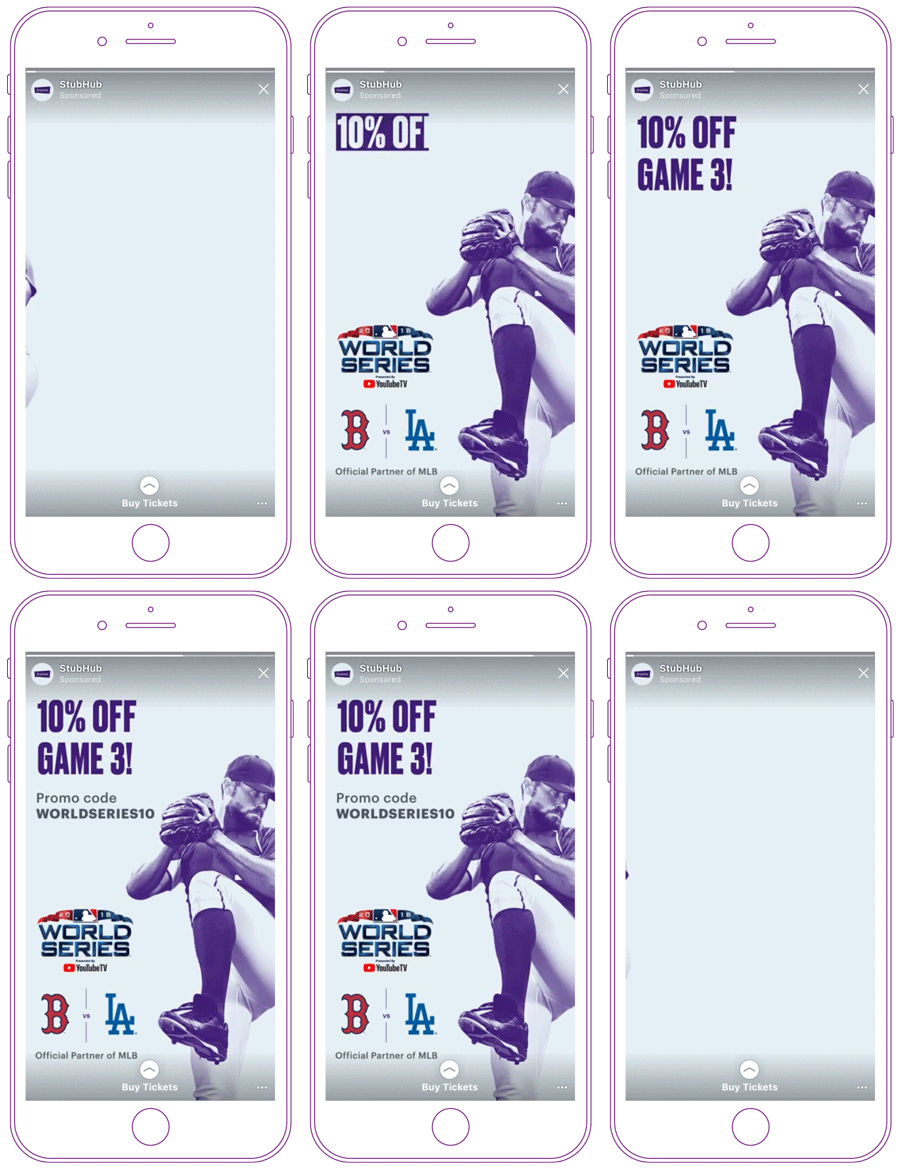 Take StubHub’s campaign to encourage ticket sales for last year’s Major League Baseball playoffs and the World Series. Matchups changed each time a team advanced, Roslyn said.
Using the templates, however, StubHub automated video creation and deployment across Facebook and Instagram using preselected assets split by geography, winning team and audience segment.
“We set up the campaign very much like we set up search, with an automated system ready to go,” Roslyn said. “It was such a volatile time, that even missing the window by a few hours when a team clinches could have had a serious impact on the business.”
The click-through rate on its automated video prospecting campaign for MLB ended up being two times higher than StubHub’s usual benchmark, and return on ad spend was 37% above its norm.
But the most promising metric was cost per acquisition, which was 24% cheaper than retargeting alone.
When StubHub starts with video and follows up with an evergreen, lower-funnel conversion strategy, “it works like a charm,” Roslyn said.
If someone watches a video about Ariana Grande, for example, that’s a specific signal that StubHub can use to power its retargeting. An efficient upper-funnel branding strategy lowers the cost to acquire users when they’re actually ready to buy, Puri said.
“We’re able to grow the bottom of the funnel and, because these people were exposed to different messaging across two or three other touch points, we’re able to convert them better,” he said. “And there’s also a higher propensity of them converting.”








