

 Time Inc. has set up a private exchange with inventory from its global properties, supported by Google technology.
The new, expanded marketplace – called Time Inc. Global Exchange – is built on Google’s DoubleClick Ad Exchange and spans some 116 million global unique users (per comScore). Advertisers and marketers can use it to reach audiences across properties such as Time, Sports Illustrated and People in the United States, and Wallpaper, Marie Claire and InStyle in Europe.
The offering replaces the Time Exchange, a US offering that has been in place since September 2012.
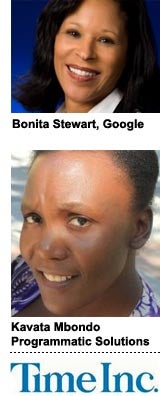
According to Kavata Mbondo, Time Inc.’s VP of programmatic solutions, the exchange will expose Time Inc. inventory to new demand from Google, while also supporting guaranteed deals with buyers that want to transact programmatically.
Mbondo said large brands have been clamoring for more automated buying mechanisms for one to two years, and those cries are getting louder.
“They told us programmatic is a way [they’re] thinking of buying,” she said. “That kind of forced the issue with us. If one of your biggest spenders says, ‘This is a channel we want to invest in and experiment with,’ we’re going to invest in it.”

There’s also an international monetization piece, which is a big reason Time Inc. has added inventory from its UK publishing group to this exchange.
Mbondo said, “Since all trading desks have such a huge global footprint, we are saying to them, ‘You have offices all over the world. We have audiences all over the world. You can access them through this single point.'”
Additionally, the embrace of Google’s ad tech has not pushed Time Inc.’s other sell-side technology providers out the door. For instance, long-time partner Rubicon Project remains a supplier, Mbondo said.
Bonita Stewart, Google’s VP for partner business solutions in the Americas, also emphasized the global demand available to premium publishers such as Time Inc. through private exchange functionality.
“The opportunity is to not only operate within the US, but to work with a company such as Google that allows our global footprint to facilitate larger deal sizes, and global brands,” Stewart said.
The deal comes two days after Google signed a deal with the Local Media Consortium to power a private exchange on behalf of some 1,000 regional newspaper and broadcast outlets. Taken together, the deals suggest Google sees ongoing value in serving large media companies with custom programmatic platforms.
“With programmatic taking off, what we’re now seeing is the influx of premium inventory as part of the programmatic equation,” Stewart said. “Today you see the back room, which is ad tech, come to the front room. That requires understanding strategy, getting close to the publishers.”
More from AdExchanger’s discussion with Time Inc.’s Kavata Mbondo below:
AdExchanger: Can you give a brief history of Time Inc.’s programmatic selling activities?
KAVATA MBONDO: I started at Time Inc. about seven years ago. Believe it or not, I was at that point still managing this revenue stream. It was the days of ad networks. We had contracts with ad networks – about nine of them. There were no SSPs, and it was a little more manual in terms of how we managed the business. Time Inc. stayed that way for a few years after that.
We approached programmatic with a lot of trepidation. We partnered with an SSP on the technology side. The exchange environment was a place for us to take our unsold inventory and make it available to the open market for whatever price it commanded. We were very hands-off with how we drove the revenue.
How did that evolve?
Then everything changed, and programmatic became the way great advertisers and brands wanted to transact. We started looking at this as a strategic revenue channel. We viewed it as a way to increase and enhance the conversations we had with the buy side. At base, Time Inc. is great at bringing consumers together on our websites, and we have a sales force that’s really excellent at connecting consumers with what the advertiser needs. We started looking at programmatic through that lens.
What did Time Inc. do specifically?
We launched [in September 2012] the Time Exchange for all US sites. We’ve been doing this for only about one and a half years. Since then my role has changed dramatically. Now programmatic is a revenue stream that fully complements how we sell. Our brands have huge sponsorship packages that we put together. Buyers say, I want to buy the big stuff, but programmatic has become a meaningful way to access premium inventory.
Finally, [international publishing arm] IPC obviously has great brands that are Time Inc. brands. It just made sense to match our efforts. Since all trading desks have such a huge global footprint, we are saying to them, “You have offices all over the world. We have audiences all over the world. You can access them through this single point.”
How did that change happen, where big brand advertisers began wanting to transact programmatically?
There were a lot of things that lined up. On the tech side, the SSPs, the DSPs have done a great job of innovating and making things easy to implement. Deal ID is a big deal. Where before it was a one-to-many relationship, the technology now allows us to continue those great relationships with advertisers on a one-on-one basis.
Luckily we have a long history of working with some of the biggest brands out there. And they told us, “Programmatic is a way we’re thinking of buying.” That kind of forced the issue with us. If one of your biggest spenders says, “This is a channel we want to invest in and experiment with,” we’re going to invest in it.
We tested, we experimented, and the money followed.
What does this Google-enabled private exchange do for you?
The biggest thing it does is combine our audiences. Programmatic is a way to access audiences as efficiently as possible, between Time Inc. and our IPC properties we have 116 million plus consumers across desktop and mobile that we can put together. As the buckets for programmatic increase, we need to deliver more.
It’s also an opportunity for us to bring together our joined intellectual efforts. That’s an added bonus.
Is this about bringing in demand through the Google Ad Exchange, or enabling direct deals between Time Inc. sellers and agencies/advertisers that want to transact programmatically?
It’s both of them.
How much inventory do you see being transacted?
It’s too early to tell. We’ll be able to share more once we’re fully in market and everybody’s crazy about what we’re doing.
Updated with note on Time Inc.’s relationship with Rubicon Project.







