
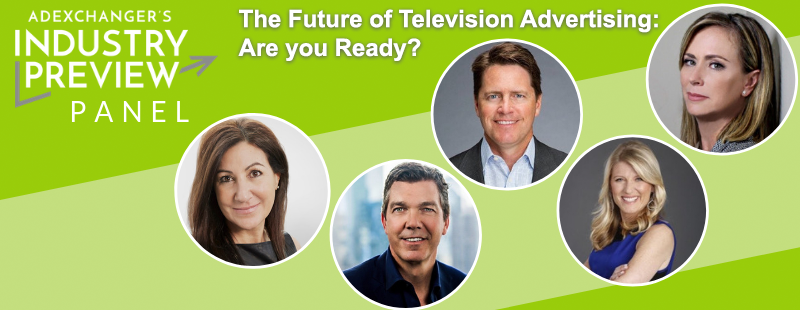
The Future of Television Advertising: Are you Ready?
Is TV advertising dead?
I mean, think about it. With social media ads, TV networks have never faced more competition for advertising dollars. Meanwhile, subscription services like Netflix have proved that ad-free TV can be a super-profitable model.
It’s easy to see how this could be the end of an era.
But before we jump to conclusions, let’s take a look at the numbers:
- Half of all broadband homes subscribe to both traditional and over-the-top (OTT) services
- More than 220 OTT services are now available, and ¼ of consumers have subscriptions to 4 or more
- TV ad revenue increased by 7.1% in 2018, but digital ad revenue increased by 16.8%
Conclusion? No, TV advertising isn’t dead — it’s just become digital. And to innovative marketers, this shift opens a whole new world of advertising opportunities.
In fact, according to one panel of experts, we are just now entering the “Golden Age of TV Marketing.”
The panelists represent 4 companies — Hulu, NBC Universal, Viacom, and Turner — and over 50% of all available TV ad impressions.
These giants came together on a single stage to discuss the opportunities that advertisers and networks face in the brave new world of TV marketing.
HOW TO: Master TV advertising in the digital age
1. Advertisers: negotiate for guarantees based on business outcomes. Networks: give advertisers a metric to gauge attribution
As a marketer, demand attribution data that you can tie directly to sales and use to justify your TV budget. As a network, provide that data to your client — or your competitor will.
70% – 80% of NBC Universal’s clients now request attribution, so they created CFlight — a single metric to measure campaign effectiveness across platforms →
2. Advertisers: engaging content is more important than ever — better data is not an excuse to get lazy on quality
High-quality doesn’t have to mean expensive. Instead of spending millions on a multi-day product shoot, use influencers to create highly-relevant and highly-personalized iterations of the same content.
Build an influencer-based campaign for your brand →
3. Networks: Build a restrained ad model where consumers can choose their ad load
Users who opt for the ad-supported option will find the ads less intrusive because they willingly signed up for them. When combined with highly-personalized media, you can actually create a positive ad experience for your users.
Giving your users a choice doesn’t necessarily tank profits. Hulu has 73 million viewers, and 50 million of them chose the ad-supported option →

4. Advertisers: negotiate a customized service package that fits your needs. Networks: embrace the fragmentation
Today there is no one-size-fits-all marketing strategy. Networks must give clients the option to pick & choose the services that work best for them, and advertisers must demand that option from their network partners.
Here’s Donna Speciale, president of advertising sales at Turner, discussing their mindset towards clients →
Full Presentation: https://youtu.be/LI8WHP0VQso






