
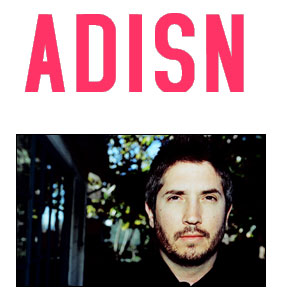
Andy Moeck is CEO of ADISN, a creative optimization technology firm.
 AdExchanger.com: Why did you start Adisn?
AM: We started ADISN because we were tired of seeing ads or having ads served to us with zero relevance to what we were doing and interested in at that time. From that point, we saw a few BIG opportunities. (1) By leveraging all of the great data that was being created across the Social and Conversational web and using that data to infer display ad placement; why wouldn’t every brand want that?? (2) Online marketing will become a huge player in overall marketing and messaging to the world; why not make sure the ads understand your needs by basic behavior/pattern online within immediate sessions? We suspect the online advertising world will grow immensely in a short amount of time and will need ADISN’S innovative technology.
Could you give us a sense of momentum at Adisn? Any strengths or weaknesses in the ad business in general that you see these days?
ADISN is moving along quite nicely. We have been growing revenue about 300% quarter to quarter – We don’t see much weakness but it definitely takes a bit more time / work to close deals. What used to take 30 days now takes 90 days but in general the budgets are still there (even test budgets).

In order to explain ADISN in the past, you’ve used a diagram of a human brain and its interests and inputs with the caption “Meet Relationship Targeting.” Bring it together for us. What do you mean? And how do you differentiate from other social targeting companies such as 33across and Media6degrees that are going after the “birds of a feather” audience?
The human diagram is an analogy for how we operate, fashioned in a visual example that conveys the human touch and a level of personalization we can offer with our dynamic creative. As for the process, we begin by [EAR] listening to users across the internet; through social media networks, blogs, and articles. We take this information and [BRAIN] store it, forming relationships between words that are often associated with each other on the web by hundreds of millions of people every day. When serving ads, [EYE] we see words that match ones we have stored and look to the other words we have related to them in our system. Putting two and two together, we [MOUTH] serve up a relevant ad that speaks to the user based on our relationship-targeting. Coupled with our dynamic creative (ad layout personally customized, not template-based), it makes for an outcome which is incredibly tailored and extremely relevant per user.
Who is your target client base and why? Also, please describe your revenue model.
Individual advertisers as well as advertising agencies of all sizes. Agencies use us as they would an ad network (to make their media buys) to make their media plans perform, however we also operate as the agency of record for a number of clients.
Are their advantages to the ad exchange model that social media advertisers and publishers may be able to leverage?
We are a big fan of the ad exchange model because it levels the playing field and ultimately allows the market to decide what inventory is worth. We are big supporters of what Google is doing with their DoubleClick Advertising Exchange in moving to a real time bidding model allowing us to maximize our technology without having to enter into biz-dev contracts with thousands of publishers.
Are there unique inherent difficulties of attribution related to media buying on the social web?
Attribution is a bit of a sticky issue in general in the market right now. If a media buyer decides to use 5 networks to run a campaign, the one with the most budget and highest reach is naturally going to be attributed with the ‘last impression’ more often. The individual networks are competing with each other blindly to try and be the last one to cookie the user. It encourages gaming, trying to tag the user with cheap media buys, manually overwrite other networks’ cookies, etc.
How do you see real-time bidding within the exchange model playing out?
Real-time bidding combined with the exchange model is going to have an enormous impact on the publisher world in general. Initially the impact will be minor, but we see the exchanges integrating more and more data to be made available to the real time bidders so they can make intelligent decisions. We feel like the trend will be to make more and more data available to bidders, which will further distinguish what the ‘real’ price should be for that inventory. Eventually this opens the door for publishers to put their premium inventory directly on the exchange to cut down on their cost of sales. We see this dynamic lowering overall CPM rates on the web, but also lowering costs for the publisher.
In general, how is the media buying agency model going to need to evolve? Will it need to be more technically savvy, for example?
We feel like agencies that invest in technology will be able to provide a significant advantage to their advertisers vs. those who are just doing traditional media buying.
Is this a good time to be an entrepreneur? Any advantage to being an entrepreneur in a struggling economy?
This is an outstanding time to be in a company that knows how to streamline operations and move as quickly as possible to profitability. It’s not a good time for companies who spend like a drunken sailor on unnecessary infrastructure or personnel. There are plenty of companies that will fail during this economy, and being one of the ones that succeeds is a testament to the team we have put together and knowing what it takes to be profitable.
Follow ADISN (@adisn) and AdExchanger.com (@adexchanger) on Twitter.






