
 Last Wednesday, WeShop, a consumer-focused, group buying network currently in private beta announced a $4.25 million Series A round of investment with participation from Jonathan Miller of News Corp, and Martin White, and Carlos Sala, “respectively the former Founder/CEO, and CFO, of Abacus Direct, which was sold to Doubleclick in 2000.” Read more.
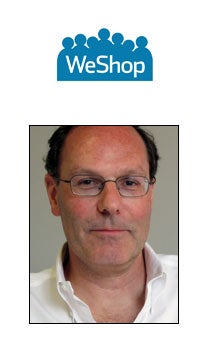
CEO Antony Lee of WeShop discussed the group buying network, its origins and the strategy ahead.
AdExchanger.com: A bit of background. What were you doing prior to WeShop? And how did it inspire the new company?
AL: Mainly WeShop was inspired by my work at Abacus Direct, where I was a client, consultant and board member. Abacus taught me that actual purchasing data is the most predictive and useful of all data, and properly applied can lead to substantial improvements in the way the world shops.
What problem is WeShop solving?
There are three problems WeShop solves –

- 1. It allows all consumer to collectively bargain for all the things they buy.
- It allows consumers to get the benefits of collective wisdom where they can share information on the things they buy, where they buy, and how much they pay, with other consumers.
- It reduces the costs and complexities of merchants finding new buyers, something that is almost completely monopolized by Google.
Who do you see in your competitive set?
Facebook is the main competition, particularly if aided by commerce data from Amazon. We see ourselves as an evolution of GroupOn and Blippy, and we see ourselves disruptive to Google and Amazon.
What is your target market(s)?
Everybody who buys online or who uses online functionalities to assist purchases offline.
How does the revenue model work for WeShop?
WeShop receives a fee from the merchant if WeShop marries up a merchant to a WeShop member and the member actually executes the transaction. A CPA model, and only applicable to new – as opposed to existing – customers for the merchant.
Why do you think this is the right time for a company such as WeShop?
We can see that GroupOn has shown there is a public appetite for group purchasing, and the commerce models provided by Amazon and Google becoming stale. We need innovation and disruption in the commerce space or it will not grow. After 10 years of the same, it’s time to bring online commerce into the age of the semantic web age.
What can you share regarding specifics for utilizing the $4.25 million of your new round of financing?
Create a seamless integration between members and the offers they receive through the WeShop platform.
Do you think your platform has benefits for brand marketers who are driving awareness or is it strictly for direct response/branded offers?
It is made for brand marketers. For the first time ever it will allow all brands to connect directly with the actual consumers who are buying their brands. Plus, it will allow brand competitors to directly approach the buyers of a rival brand with an offer to switch brands. It will turn the world of brands upside down.
A year from now, what milestones would you like the company to have accomplished?
2 million WeShop members.
Follow WeShop (@weshop) and AdExchanger.com (@adexchanger) on Twitter.






