
Brand-Trained Agents Can Give Marketers A Fuller View Of Their Customers
Agentic commerce company Envive builds on-site agents for brands like footwear company Clove, painting a clearer picture of what their customers are looking for.

Agentic commerce company Envive builds on-site agents for brands like footwear company Clove, painting a clearer picture of what their customers are looking for.

With RFPs in flux, diverse-owned media companies are finding ways to use their data to improve reach. Plus: Why we’re in retail media’s “potty-training” phase.

Opal launched Gem, a new AI solution, to help large brands unify the layers of media and tech within their organizations.

Mula’s AI native content feed helps On3 keep its engagement and RPS consistent amid traffic drop-offs to publisher sites and the growing scarcity of online attention.

Measurement and performance are expected to dominate convos at upfronts; Tubi doubles down on AI; and Meta takes down ads encouraging anti-Meta lawsuits.
Every company wants an AI-powered product. So what do they all look like? From A/B testing and media optimization to agentic interfaces for customers, we give a rundown on AI’s most popular applications in ad tech.

Sonia Chung, Boathouse’s new CMO, wants to help the agency (and the industry at large) take full advantage of its data.

Swivel and Olyzon’s new partnership brings buy-side and sell-side agents together as early examples of an agentic marketplace.

Netflix’s MLB streaming is heavy on the ads; the anti-AI movement gains traction; the court dismissed X’s antitrust allegations.
The NewFronts, digital video’s week of splashy sales pitches, is in full swing. Our reporters share what they learned on the ground. Plus: What can ad tech learn from Data, a new off-Broadway play?

Hotel chain Red Roof is using Zeta’s new voice-activated AI agent to guide its campaign creation, deployment timing and audience development.

Customers don’t need perfection. But they do need to know that a brand will make it right when something goes wrong.

A weekly comic strip from AdExchanger.com that highlights the digital advertising ecosystem… It was neck and neck, but the votes are in and we have a winner! Guess even robots deserve a safe space to process all that data. And hey, it can’t hurt to be polite. 🤖 A big congrats to Thomas Kernan, head […]

Realtor.com is working with AI marketing startup BrandComms.AI to generate ad creative more quickly and across a wider array of channels.
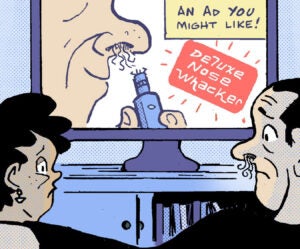
There are more pharma ads on CTV, but are they even targeted?; Gen Z longs for the ad-free TikTok of yore; and Meta buys a social network for AI agents.

Netflix unveils a conversion API; some publishers are using AI tools to expand their footprints; and CFOs are getting more involved in marketing decisions.

Ad platforms are nixing credit card payments; LLMs are getting really good at unmasking online users; and McDonald’s offers a case study in how not to do organic social media.
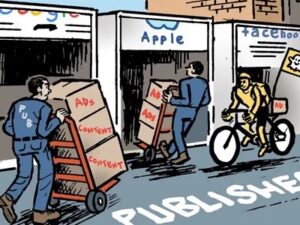
Criteo joins OpenAI’s ad pilot; Google considers making its own AI landing pages; and the Supreme Court passes its own judgement (kinda) on AI.

The future of publishing won’t be defined by where content lives, but by how it’s created, licensed, distributed and valued, writes David Kohl.

Buyers dig Netflix’s ad platform changes; OpenTable puts the “restaurant” in “RMN”; and Google and Amazon blame human error even when it’s AI’s fault.

What’s the deal with viral apps?; Dentsu and WPP are off of OpenPath; and AI coding has its downsides.
Analog Intelligence The AI marketing boom is here. And not just for auto-generated creative or campaign optimization. San Francisco is one of the few places (besides airports) filled with B2B advertising on billboards. Good luck relaxing during a stroll with your iced coffee and Tartine pastry on a weekend, because you’ll walk or drive by […]
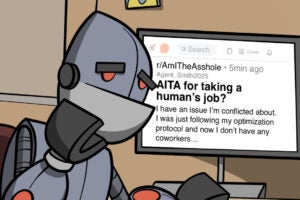
Omnicom just reported its first earnings since closing the IPG deal and, shocker, it’s saying AI is main growth driver for combined holdco.

Freestar CEO Kurt Donnell explains why transparency in programmatic advertising is the open web’s best bet for survival in the AI search era.
An emerging consensus among Wall Street investors, based on the earnings reports of companies like Meta and Alphabet, is that subscription software is on the way out. LiveRamp, which reported its Q4 earnings on Thursday, is staring straight down the barrel of this conventional wisdom.

At the IAB Annual Leadership Meeting this week, IAB CEO David Cohen demanded publishers receive payment from AI companies who are taking their content. As publishers grapple with AI redirecting the attention they receive from consumers, what’s their path forward?

On stage at the IAB’s Annual Leadership Meeting, IAB CEO David Cohen tore into AI companies, accusing them of “free riding” on publishers’ work – and calling it “stealing.”

Big Tech seems overconfident their ad revenue growth isn’t tied to the economy; Microsoft AI launches a publisher licensing program; and the unique security vulnerabilities of Moltbook’s social media for AI bots.

Ripping out battle-tested infrastructure and starting from scratch – as some emerging agentic protocols propose – is the slowest and most painful path to advertising’s agentic future.

Q4 earnings reports are heating up; Private equity firms get squeamish; and AI data centers are harder to build than ever.