
The Dischler Departure; Here Come The LLM Ad Networks
Jerry Dischler leaves Google; a bunch of marketing execs join AI companies; agency holdcos don’t know which way is up.

Jerry Dischler leaves Google; a bunch of marketing execs join AI companies; agency holdcos don’t know which way is up.

Proof keeps piling up that gen AI makes marketing creatives lazy; Google stops serving ads to parked domains, prompting questions as to why those domains were ever monetized; and a resurgent David’s Bridal thinks it can reach profitability this year.

Everything is (or becomes) an ad network. And then it gets ruined. Plus, there’s something the Trump administration has in common with the ad tech world.

Forecasters expected tariffs would impact advertising growth projections. But that was before we knew exactly how steep these tariffs would be – and now that we do, it doesn’t bode well.

An Adalytics report released Friday details numerous instances of brands serving ads to known bots that appear on the IAB Tech Lab’s International Spiders and Bots list and TAG’s Data Center IP List.

The Trade Desk’s weak Q4 emboldened the company’s critics; DOGE’s cuts to federal agencies are hurting ad agencies; and President Trump fires the two remaining Democratic FTC commissioners.

YouTube advertisers prefer long-form videos to Shorts; Microsoft tests an ad-supported version of its Office suite; and Chegg sues Google over lost traffic from gen AI search.

Criteo’s Brian Gleason shared how it is working with agencies to capitalize on curation and measurement opportunities in retail media and CTV.

AI chatbots entice users into subscriptions with free trials; non-pornographic content creators are raking in ad bucks on PornHub; and the US TikTok ban has Americans flocking to other China-based apps.
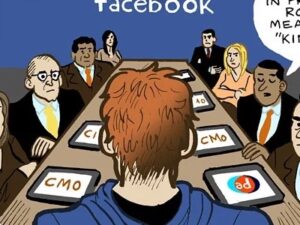
Publisher C-suite drama has been making headlines recently. Plus, there are now 27 different active lawsuits against various AI content generation companies.

Black Friday ecommerce continues to surge, mainly on mobile; social platforms pull optimization features for health and beauty brands; and Google’s antitrust lawyers subpoena info about rival AI search startups.

Forrester released its first SSP wave since 2014 last week, and there’s a surprise. The research firm ranked Google – whose sell-side ad tech platform is facing federal antitrust charges – as a mere challenger.
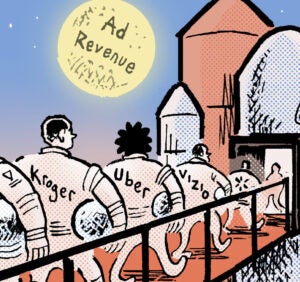
Airbnb gets one step closer to launching a retail media biz; Google shakes up its ad tech executive team; and streamers struggle to balance ad and subscriber revenues.

Google isn’t perfect. But it offers convenient, cost-effective advertising tools that millions of small businesses use to find customers, grow and succeed. If the DOJ breaks up the company, it will also break those tools.

It might be surprising to learn the government fights against monopolies the same way now as it did in the late 19th century – partly because the laws haven’t needed to change all that much.
In today’s newsletter: Pinterest launches an ad optimization solution with familiar-sounding name; consumers can’t live without YouTube; and ad tech leaders try out trade journalism.

In today’s newsletter United Airlines gets into retail media; why AI fails to catch AI-generated content; and political advertisers flock to X for cheap impressions.

In today’s newsletter: Roku and The Trade Desk expand their partnership; Instagram changes its content recommendation system; and the European Commission investigates Meta for potential Digital Services Act violations.

In today’s newsletter: The CMA still has a bone to pick with the Chrome Privacy Sandbox; the FCC fines mobile carriers for selling customer location data to data brokers; and the Financial Times is the latest publisher to strike a licensing deal with an AI company.

CEO Mark Zuckerberg cautioned that it will likely take years before Meta’s generative AI products, including Meta AI, are ready for monetization.

In today’s newsletter: Google AdSense publishers are in crisis; Apple is fighting antitrust suits in the UK and the US; and Sherwood Media has a post-SEO strategy.

Industry experts weigh in on Forbes’s MFA subdomain and why ad verification tools still regularly fail to flag some instances of alleged SIVT.

In today’s newsletter: Google’s ad strength meter could push advertisers to adopt Google’s campaign preferences; Home Depot hosts an “InFront” to show off its RMN, Orange Apron Media; and the Privacy Sandbox rollout could do serious damage to the online ad industry.

The vast majority of advertisers who buy ads in video games (91%) no longer consider gaming to be an experimental media channel. But ad spend in games still lags behind audience engagement.
In today’s newsletter: Performance Max has many imitators, but Google’s still ahead of the pack; France’s competition authority fines Google for using news content to train its Bard AI model without their knowledge of consent; and Apollo Global Management offers to acquire Paramount Global for $11 billion.

New contextual targeting tools use generative pre-trained transformers (GPTs) to analyze websites and and build contextual audience segments. The companies behind them believe that GPTs can address some of the problems that plague contextual targeting.

In today’s newsletter: Apple adopts the owned-and-operated model for its ad platform; the banality of click farming; and how consumers and businesses alike are getting squeezed on data storage costs.

In today’s newsletter: Microsoft Edge debuts its Ad Selection API, a PAAPI competitor; the EU’s DMA is live; and OhHello aims to help ad industry employees network.

In today’s newsletter: Big Tech may be best positioned to take advantage of generative AI’s ad tech uses; ad tech leaders waffle on investing in Chrome’s Privacy Sandbox; Google faces an innovator’s dilemma.

In today’s newsletter: Google agrees to placement-level reporting across its Google Search Partners network; how an explosion of ads is ruining the internet; and Google pays publishers to test an unreleased generative AI tool.