 “the creative” is a column focused on the creative side of digital marketing.
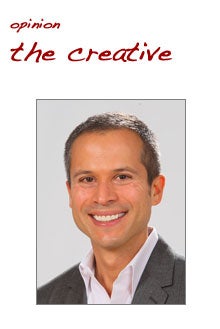
Today’s column is written by Barry Lowenthal, President of kirshenbaum bond senecal + partners‘ The Media Kitchen.
I was inspired by a SlideShare presentation written by Paul Adams (@padday) who works on the UX team at Google. The presentation discusses the convergence of our social networks. I thought the presentation was terrific and it got me thinking about what privacy means today, especially given the recent expose on the topic by the Wall Street Journal.
I have many social networks. I have groups of friends from various life stages that I’ve accumulated over the last 45 years. I have friends I went to Yeshiva with and friends I went to camp with. I have friends from Cedarhurst, where I grew up, and friends from college. I have friends from my first job at NW Ayer and friends from my current job at The Media Kitchen. I have friends from the gym and friends from Fire Island and friends from the NY Tech Meet Up. I also have friends from Laughing Yoga class. I probably have a dozen different offline social networks. Some of them overlap offline and online. But in many cases friends from one network don’t know the others. Usually it doesn’t bother me if my networks collide but in some cases I like keeping my friends apart. In some areas of my life I like keeping my activities private.

When I first joined Facebook I figured out how to set my privacy screenings so my friends couldn’t see my friends or my friends’ friends. I reasoned that I would be judged, incorrectly and unfairly, by how some of my friends present themselves or by their friends. After all I there is truth in the adage ‘you are the company you keep’.
But it’s gotten way too difficult to stay on top of my privacy settings and it’s gotten way too difficult to try and limit access. Now I don’t accept a friend request if I don’t want them exposed to my entire life.
Not only have my social networks collided the walls have come down. What privacy meant a few years ago has taken on different meaning today. Today if I don’t want someone to know something about me I don’t do it and I don’t say it. Separation of message is just not a viable option any longer. I assume that all of my actions and all of my friends are public information.
The Internet and social media have disrupted yet another important concept that has wide marketing implications. Just like I’ve learned to live my life transparently, so to have the brands I help my clients manage. We assume that all of our marketing will be fully exposed for scrutiny. While we have the ability to micro target and message to individuals in real time, we assume that all will know everything we say. In this regard, I think Target learned a valuable lesson. A company can no longer publicly support one group while less publicly support that group’s opponent.
How data is collected, how data is used, what information is made public is being hotly debated. This whole debate assumes that some information should be kept private; that it’s our right to keep information private and that we should be paid fairly to make information public. While I don’t disagree, I think it’s interesting to observe that our tolerance for keeping information private has diminished, starting with our social networks and how we talk about ourselves.
Follow Barry Lowenthal (@barryl530), The Media Kitchen (@theMediaKitchen) and AdExchanger.com (@adexchanger) on Twitter.