 “The Sell Sider” is a column written by the sell side of the digital media community.
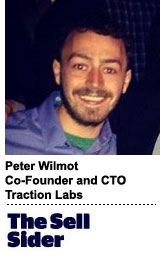
Today’s column is written by Peter Wilmot, co-founder and chief technology officer at Traction Labs.
While media companies struggle to monetize time and viewership, audiences continue to migrate away from owned-and-operated domains, instead relying on news feeds to aggregate content from around the web.
This poses two clear issues for publishers. First, it means less-active users on their sites and second, it requires them to trust their content to another entity, such as Facebook or Google.
On top of this, even if a publisher can get a user to click through from a content aggregator to their site, 33% of internet users and 66% of young users block ads. Without government intervention, this trend is unlikely to slow.

Facebook capitalized by capturing audiences in its centralized content hub while preventing ad blockers on its domains. It has convinced nearly all content creators, both professional and the general public, to create and share content without compensation on its platform. The brilliance of the business model is clear: Even your son’s lemonade stand can make a profit if he gets free lemons, but the growers and grocery stores lose out.
Facebook has indicated recently that it will share some revenue on long-form video content, but shouldn’t all professional content creators insist on being paid to share content on the platform? Or is the exposure that Facebook offers really that valuable?
Things may seem somewhat bleak for publishers and content creators but there are a few solutions that may help.
Social media platforms could agree to fairly split revenue with content partners. This may come in the form of Facebook Instant Articles, Google AMP or Medium, but bigger publishers definitely need to be wary of complete monetization dependency.
Publishers could create a more diverse cross-channel content strategy emphasizing brand innovation and content creation. Services such as Netflix, Amazon, HBO and Hulu have demonstrated that premium, original content can bring viewership that is willing to pay. This mantra is expensive to implement but has proven to resonate around the web.
The government could step in and start considering ad blocking as equivalent to piracy. This won’t fully save publishers but would be a step in the right direction in their struggle to monetize viewership.
And finally, the donation-based, micropayments economy could expand to the digital ecosystem. Enabling content consumers to tip creators has taken off within a number of live-streaming services, such as Twitch, WeChat and YouTube. Applying this model to all forms of content could help ease the burden of monetization for publishers.
Looking Ahead
I predict Facebook will continue to see a reduction in organic original content and be forced to pay for more creators to share on the platform. Facebook engagement will decline within the US and Facebook will be thought of less as a publisher and more as an advertising platform, leveraging its data monopoly across other assets, including Instagram.
I also see the internet continuing to exponentially increase in size and trend toward live content. People will be able to index content creators to interact with them in real time around any type of content. This will increase the fragmentation issue and require the mass adoption of time-based payments, either by an omnipresent, PayPal-like solution or directly from the internet service providers.
Follow Traction Labs (@TractionLabsInc) and AdExchanger (@adexchanger) on Twitter.