

Cords are getting cut left and right, but TV still works … right?
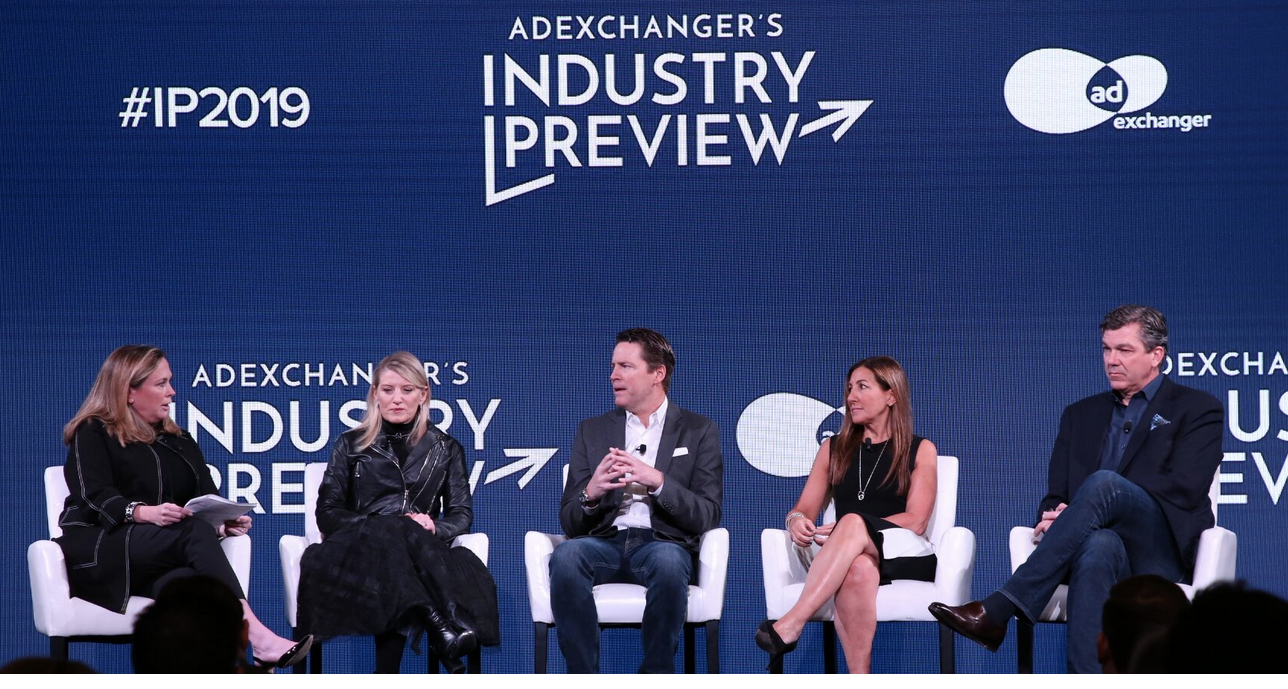
“We all know that TV does drive ROI, but there haven’t really been any proof points like there has been in digital,” said Donna Speciale, Turner’s president of advertising sales, at AdExchanger’s Industry Preview event in New York City on Wednesday.
That’s starting to change as linear broadcasters join forces in the name of measurement and start reserving more inventory for buys that aren’t based on standard Nielsen demos.
“There can’t be walled gardens,” said Speciale, pointing to OpenAP, a TV consortium comprised of broadcast networks, including Fox, Turner, Viacom and NBCUniversal, that launched in 2017.
“TV is a platform and we need to present that to marketers so they can buy across our entities at once,” she said.
Yet, some broadcasters seem to be going about it alone. NBCU is making inroads into cross-platform measurement with CFlight, a common impression-based metric the broadcaster developed last year.
Still, marketers are being held accountable for the revenue they spend on advertising, so they need to make sure it works, said Laura Molen, president of advertising sales and partnerships at NBCU.

“And we need to give advertisers one measurement source for all platforms,” Molen said. “That also helps with yield and optimization.”
Despite these “bold moves and ambitions,” however, buyers are still largely discontented with the speed at which traditional TV is adapting to the advanced TV ecosystem, said Kelly Clark, global CEO of GroupM.
“One of the frustrations we see is the ability to buy what we want when we want and to have the data sets we need to support those decisions,” Clark said.
Down with VOD
But while measurement and attribution work themselves out behind the scenes, people are changing the way they watch TV.
“We see so much viewership migrating to the digital space,” NBCU’s Molen said.
And people who consume video on demand through digital channels have gotten accustomed to a “restrained ad model,” said Peter Naylor, Hulu’s SVP of advertising sales. But that doesn’t mean people aren’t open to subsidizing their consumption through advertising.
“If you give people a choice between ad supported and ad free and let them opt into it, they know ads come with it and it’s not an intrusion,” Naylor said. “They have chosen their experience.”
In Hulu’s experience, most opt for the ad model. Hulu has 25 million subscribers and 73 million viewers – which means that nearly 50 million of its customers are choosing the ad-supported package.
We may be living in a golden age of content, but there are only so many streaming video services a poor consumer can be expected to subscribe to.
That’s part of the reason Viacom decided to acquire ad-supported streaming service Pluto TV. The $340 million deal, announced Tuesday, propels Viacom into AVOD (ad-supported video) space, giving the broadcaster a new audience – Pluto has 12 million monthly users, mostly on connected TVs – and a new distribution channel.
“You could say that things are getting more complicated and fragmented, but we found out that you’ve got to embrace the fragmentation,” said Sean Moran, head of ad solutions at Viacom. “If you don’t embrace it, you’ll be pushed out.”






