Although the lion’s share of sports fans still turn to traditional TV for live events, one sports media company found a way to amass billions of views from millennial sports fans on Facebook and YouTube alone.
Like many major sports broadcasters, Whistle Sports sought the legitimacy that comes from pro-league partnerships with the NFL and MLB.com. But it also saw the opportunity for the community aspect of social influencers – in this case, YouTube content creators – to foster fan loyalty.
This strategy appears to be working. In less than two years, Whistle Sports’ subscriber base has reached 131 million, growing at a rate of 2 million per week, the company said. It also works with 320 channel partners to reach its target demographic of 14- to 30-year-olds.
“The sports leagues were concentrated on big TV networks, but we found social influencers had three times more influence on things like purchase intent and brand affinity for millennials than their favorite sports stars,” said Brian Selander, EVP of Whistle Sports. “We saw that millennials preferred social video.”
When Whistle Sports officially launched in January 2014, YouTube was the dominant video platform. That changed quickly once Facebook developed its own video player.
Though Whistle Sports originated with video on YouTube, its Facebook fan base, now totaling 58.9 million subscribers, is nearly double the number of its YouTube subscribers, 29.8 million.
“Although we were known as the YouTube sports network, when Facebook started building out its video play, we saw the opportunity to take off running and branch out,” Selander said. “There’s a seismic shift in how millennials view advertising, especially on social platforms. They view it as a chance to be entertained.”

In addition to its audience growth, Whistle Sports built up a portfolio of monetization products that includes targeted media, such as social activations and amplification, as well as branded content and sponsored collaborations.
Disney, for instance, wanted to reach a millennial audience for a Paul Rudd movie, “Ant-Man.”
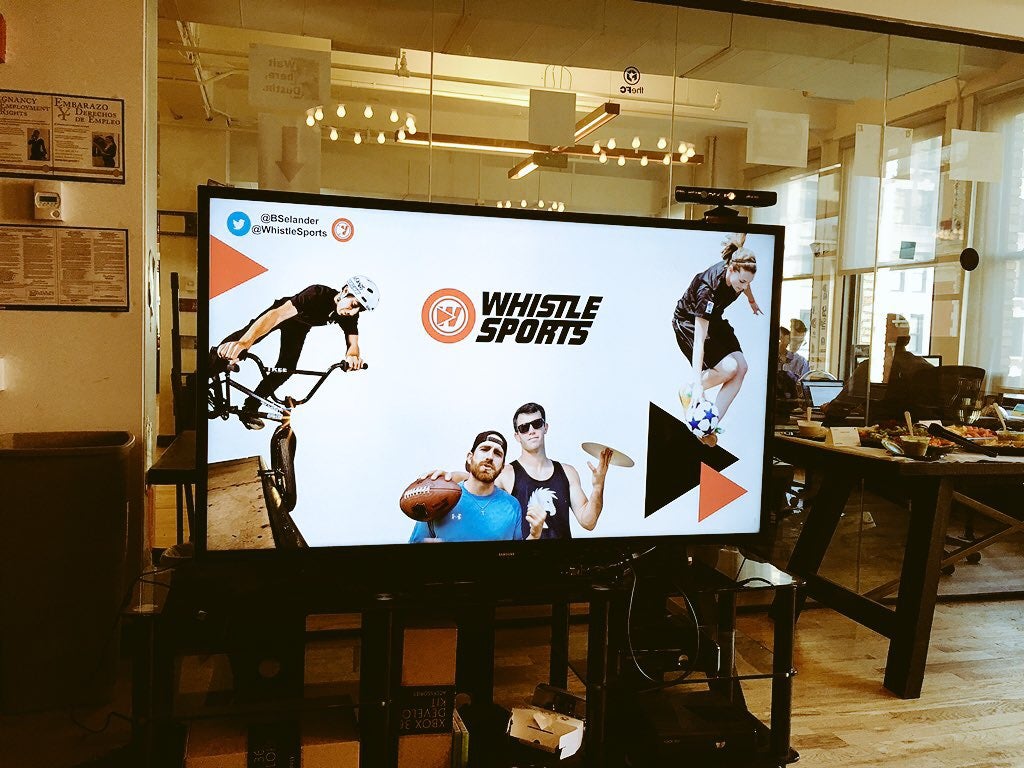 Whistle Sports helped it create a branded video integration with Dude Perfect, a popular YouTube sports network, where Rudd comically competed with the influencers in a “dizzy sports battle,” requiring the contestants spin heads-down around a baseball bat for 15 seconds before trying their luck at hitting a ball. The video description included embedded links to the movie.
The campaign also cross-amplified the video across various platforms, including Major League Baseball.
The campaign, which ran between June and July, produced 3,349,074 views on YouTube within two days, with 544,544 total engagements cross-platform. The average video session length was a healthy five minutes and 44 seconds.
“If you’re a brand, we’re saying, ‘Here are six creators you might want to partner with who get 3 million loops on Vine daily,’” Selander said. “We have a community-based perspective to creating where we really embrace our 130 million fans, [but at the same time] tell brand partners that the tweet or content they’re sponsoring will never be next to something questionable.”
One priority in Whistle’s playbook is more original video and content licensing agreements. Following an investment from UK broadcaster Sky, Whistle Sports and Sky Sports collaborated on a new social channel for youth-oriented football fans.
Whistle Sports also just inked a partnership with Verizon-AOL’s new mobile video network, Go90, which will spur the creation of seven original series with more than 86 episodes.
“We look for partners that make it easy to share, like or clip content,” Selander said. “They [Go90] had a mindset toward social native when they launched it, which provides much greater infrastructure for content.”