“On TV And Video” is a column exploring opportunities and challenges in advanced TV and video.
Today’s column is written by Frost Prioleau, CEO at Simpli.fi.
Part of the promise of over-the-top (OTT) and connected TV (CTV) is that they marry the benefits of traditional television with digital marketing capabilities.
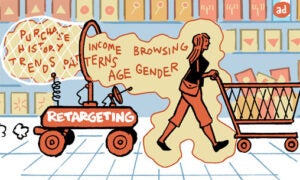
A large part of digital’s value proposition is better behavioral targeting, and buyers, especially incumbent digital buyers, expect to find their audience with precision and at scale.
But behavioral targeting is still in the early innings in “the new television,” largely because of a few key challenges.
For starters, people rarely browse the web, research products or conduct searches via their connected TVs. Because of this, the data that is readily available to target ads on desktop and mobile devices is not as accessible for targeting ads on CTV and OTT devices. As a result, much of the targeting available today for OTT and CTV advertising mirrors the demographic ad targeting that has been available on linear TV for years, with the demographic profile of the targeted audience determined by the show being watched.
The solution to this problem is the further development of cross-device maps that tie the devices used to research products and services, such as desktops, tablets and mobile phones, to OTT and CTV devices. They can relate specific devices to each other and also group all devices in a household together.

The other factor that inhibits the scaling of audience-based behavioral targeting against OTT and CTV inventory is that much of the inventory is either not sold programmatically or is sold through private marketplaces (PMPs) and deal IDs that mimic linear TV’s demographic targeting methods. Advertisers care most about mid-roll inventory delivered on the big screen, whether via OTT or CTV, because they value the engaging user experience and it allows them to reuse linear TV spots. But this inventory is also the scarcest in the open marketplace.
As of Q1 2018, direct-sold deals accounted for 89% of all premium video deals, while programmatic transactions made up just 11%, according to the FreeWheel Video Monetization Q1 2018 report. FreeWheel defines premium video as video content that is professionally produced, rights-managed and limited in supply, which is a good proxy for OTT and CTV inventory.
Because the targeting of most directly sold deals are based on the shows themselves, they do not provide the granular audience targeting that digital buyers are accustomed to. But programmatic transactions are increasing quickly. The growth of programmatic transactions in premium video is outpacing the rest of the market, at 45% year over year in Q1, according to FreeWheel. As more OTT and CTV inventory is sold programmatically, the scale at which behaviorally targeted OTT and CTV advertising can be delivered will increase.
Lastly, for behavioral targeting in OTT and CTV to scale, TV advertisers need to gain confidence in the methodology associated with the measuring of these buys. TV buyers are used to seeing reporting on gross rating points (GRP) with show, episode and time slot information, and they will increase their buys as these reporting metrics are mimicked in programmatic or they become more accustomed to digital reporting metrics.
As audiences watch more premium content on OTT and CTV devices and less on linear TV, advertisers will increase their spending and accelerate the technology advancements that will bring behavioral targeting to OTT and CTV at scale.
Follow Frost Prioleau (@phrossed), Simpli.fi (@Simpli_fi) and AdExchanger (@adexchanger) on Twitter.