 Musical.ly is mainly known as a lip-syncing and video sharing app popular with teens, but it’s starting to sing a different tune and expand its user base.
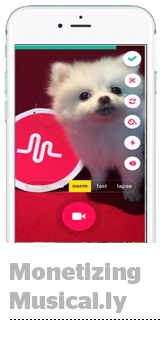 “We’re probably that lip-syncing app you hear about from your niece or nephew,” said Kevin Ferguson, director of sales and business development at Musical.ly, which allows users to create 15-second videos of themselves singing along to pop songs with layered-on effects like time lapse or fast motion. “But we see ourselves as a general-purpose video and social network.”
Rubbing elbows with the social network titans is not all that unrealistic if you look at the stats. Users spend an average of 13 minutes per day engaging with Musical.ly content, and the app recently hit 117 million users, up from 108 million in July. The app has also consistently stayed in the top 40 of app store charts – charting at No. 27 in the US free apps category in Apple’s App Store as of Monday.
Although Musical.ly’s core audience still falls between the ages of 13 and 24, the app is starting to attract a slightly older demographic. Roughly six months ago, 90% of its users were in that demo, while these days it’s closer to 60%.
With that maturation and equalizing of its base comes a flowering diversity of content.

“Users are creating more original musical comedy, skits, fashion videos,” Ferguson said. “That type of content is becoming a focus for us internally. It’s a matter of creating a broader use case for ourselves.”
Musical.ly is in the midst of running what Ferguson called “revenue experiments” to show that it has what it takes to be a partner for brands without sacrificing user growth and engagement.
Music-related efforts make perfect sense for the platform. A number of recording artists, for example, are turning to Musical.ly to launch albums, run contests and promote their music, including Jason Derula, Selena Gomez, Flo Rida and Megan Trainor.
But having amassed a large, loyal audience – users create more than 9 million videos per day on the app – it’s up to Musical.ly not to ruin that with an ad experience that feels at odds with its roots.
That’s part of the ever-present challenge facing apps looking to monetize without alienating their users. But for Musical.ly in particular, the greater challenge is demonstrating that the app can be a valuable partner to general brands, not just teen-focused ones.
Musical.ly recently ran a campaign with Coke, and another with Lionsgate for the release of its film “Nerve.” In the Coke example, users were asked to shoot videos of themselves sharing a Coke with friends or family. More than 900,000 videos were submitted.
“Some folks have asked me, ‘Is advertising on Musical.ly really valuable considering how young your demo is?’ But they have credit cards – whether their own or their parents’ – and they have an incredible amount of influence,” Ferguson said. “I think a lot of people underestimate that.”
Consider that 16-year-olds and their parents could be on the cusp of making a car purchase. A 17-year-old is likely about to head off to college and be in-market for a whole host of products – everything from bedding to financial planning.
“It makes sense to start chatting with that demo now,” Ferguson said. “But it’s not about trying to create endless monetization opportunities off of our users. It’s about creating marketing opportunities for brands and studios that feel organic to the app and lean into the behaviors we’re seeing on Musical.ly so that users are excited to participate.”
This is the fourth installment of Home Screen, a series of profiles on mobile pubs and apps and the devs who make them (and hopefully make money on them). Read about home décor app Lux, teen voting app Wishbone, wedding planner platform The Knot, pop culture magazine Movie Pilot, news app News Republic, on-demand laundry app Cleanly, music streaming app LaMusica, P2P global shopping app Grabr, kid-friendly chat app Jet.me, driving app Dash, anonymous app Whisper, storytelling app Episode, weather app Poncho, online writing community Wattpad and sticker app Emogi.