 Criteo closed 2016 on a high note.
FY 2016 revenue was up 37% to $730 million, excluding traffic acquisition costs. Criteo’s cash flow for the fiscal year also increased 16% to $159 million.
The company credits two new products – Predictive Search and Criteo Sponsored Products (formerly Hooklogic, which Criteo acquired for $250 million in October) – for contributing to that growth.
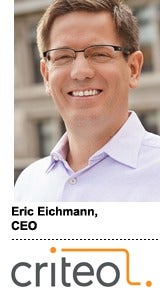
Last year was pivotal for Criteo, said CEO Eric Eichmann, as the performance marketing company began addressing new channels like offline.
“This ability to place ads online and see where sales are resulting will drive a lot of promotional dollars online,” Eichmann told AdExchanger.
In Q4, Criteo added 1,600 net new clients, the most it ever has. Several, like Toys “R” Us and Luxottica, will use Criteo Sponsored Products to serve ads on third-party retail sites and to track media exposures through to the sale.
“We’re beginning to onboard more CRM data and then match that data back to our cross-device graph to improve performance online,” Eichmann said.
Criteo matches hashed email addresses in a brand’s CRM system back to cookies using its own cross-device technology.

Criteo also aims to develop tools to help retailers compete at scale with Amazon. For instance, the Hooklogic acquisition will help Criteo build the basis for a universal product catalog to improve attribution and product recommendations.
Criteo also continues to compete with Amazon on publisher products.
The company now has 10 publishers beta-testing its new header bidding solution as Amazon separately develops its own server-side header tag.
“Everyone wants preferential access to inventory, and we’ve been successful doing that in the past and will continue pushing toward that,” Eichmann said.
He added: “A lot of these technologies are just about connecting buyers and sellers more efficiently, and as long as we can access inventory, we feel good about our ability to monetize and be the best at assigning value and displaying an ad most relevant to that user.”