
AdExchanger Talks is a podcast focused on data-driven marketing. Subscribe here.
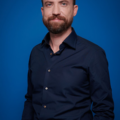
Google’s top digital marketer, Bob Arnold, is our guest in the podcast studio this week. Many listeners will remember Bob’s early advocacy of programmatic drawn from his time at P&G and Kellogg.
“I’m still a dyed-in-the-wool CPG marketer,” he says in this episode. “Marketing is marketing, and what’s great about programmatic is it enables scale and mass personalization that we’ve never had before.”
Today he’s focused on growing Google’s products, many of which have surpassed a billion users, including Search, Maps, Gmail, YouTube and Android. “It’s really about how do we continue to make Google’s brand one of the most beloved brands in the world while continuing to introduce new products and new ideas.”
So how does Google do it? A few highlights from the episode, which you should check out in its entirety, include:
Partners. The company works with two agencies, Essence and PHD, despite having an extremely scaled in-house marketing operation. “We definitely believe in the model. They bring a certain level of expertise to the table and a different perspective,” Arnold says.

Strategy. “Job one is to build the brand.”
Media mix. Video is key, but digital display is also great for contextual relevance. Linear TV is still essential, though its audience is shrinking. Cord cutters are more challenging to find with high-impact ads, but Arnold says, “Hulu, YouTube, Facebook and others have the scale we need.”
Data Insights. Google knows when people are likely to use its products. Take Google Photos: People save photos on the weekend, and that influences ad targeting and creative decisions.
Also in this episode, Bob talks about advancements in programmatic. He sees an immediate future where marketers can go beyond fraud prevention and viewability to identify “better moments of attention.” Google has made progress in this area, using AI to find the most premium sites for a certain campaign or brands.
“That’s where the real opportunity is, and I think machine learning can help us get there,” he says.