


Three years after dissolving its VivaKi trading desk, Publicis Groupe has launched a data-driven center of excellence for its media agencies.
The group, called Precision, formed about two years after VivaKi melted down its Audience on Demand trading desk and redistributed its staff to operating agencies. The new centralized group will offer support to programmatic teams at those agencies, including Starcom, Zenith, Mediavest Spark and Blue 449.
Precision also buys media for some clients directly, in arrangements that offer guaranteed outcomes with nondisclosed fees.
Since undergoing a major reorg in late 2015, Publicis has remained quiet about its programmatic strategy. Competitors, meanwhile, have been vocal about modernizing their trading desks into hubs for shared technology, data and data-driven buying.
But behind the scenes, Publicis Groupe has been crafting its own answer to audience-based buying: seven research and development practice areas that support media teams at the agency level. Precision is the group that focuses on programmatic.
Other groups have expertise in performance marketing, content, analytics and insights, business transformation, data and technology and investments. The practices centralize back-office functions like billing and IT and establish best practices for Publicis Media’s agencies.
“We pull together capabilities and talent to provide perspective and thought leadership, but we will never create a hub that does everything for every agency,” said Paul Williamson, president at PM Precision. “That will devalue the agency.”
As Publicis Media rolls out Precision in new markets this year, the holding company hopes to grow consistent programmatic practices and data strategies across its agencies while championing the agencies as the owners of the client relationship.
“If you have a consistent data approach as an international brand, it shouldn’t matter to you what screen that shows up on,” said Jay Askinasi, global president, Publicis Media Investment Solutions. “What matters is the audience you reach, what the message is and keeping that consistent. Precision is going to be the driving force of that strategy globally.”

Inside Precision
When Publicis Groupe broke down its trading desk in 2014, it did so as part of a vision that programmatic expertise should exist at the agency level, where talent interacts with their clients on a day-to-day basis.
The formation of Precision shows that some kind of central strategy was needed. Publicis saw an exodus of programmatic talent after breaking up VivaKi and needed beef up programmatic teams at the agencies.
The Precision team is split into two groups: 300 employees sit on account teams at the agencies and 100 employees work at a central group at the Publicis Media level. The central group creates POVs, incubates programmatic strategies for emerging media channels like out-of-home and TV and negotiates unique access to technology, data and inventory for the agencies, Williamson said.
“We’re enabling [the agencies] to focus on what’s different in their approach while taking care of a lot of things that are commodity and/or gained through efficiencies of scale,” he said.
Media agency Starcom leans on Precision and its technology daily for help with billing, training, assessing vendors and supporting client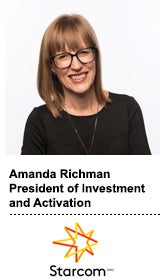 onboarding, said Starcom’s head of investment, Amanda Richman. Starcom uses tools developed at Precision and the data, technology and innovation practice to manage vendor verification, frequency capping and campaign optimization.
Precision’s matrixed structure makes it easy for her employees to make suggestions “directly to the folks that are developing products and want that input,” Richman said. Investment leads across the media agencies meet with the central group monthly.
Precision can then act as an intra-agency clearinghouse for known issues, fixes and emerging opportunities.
“We’re getting more visibility into best practices across all categories for clients of different sizes and commercial models,” Richman said. “[It’s] quicker to identify challenges in categories that other agencies aren’t aware of because they don’t have a client in that category.”
Post-Desk
Precision’s central group also buys programmatic media for Publicis Media clients that opt in to a guaranteed outcome with nondisclosed fees, a structure still widely employed at rival holding companies despite a gradual, industrywide phase-out.
Despite the Association of National Advertisers’ report detailing nontransparent practices at agency trading desks last year, less than 5% Publicis Media clients agree to this guaranteed model, the agency said.
“We do take principal positions in media, but it’s all about the outcome,” Askinasi said. “Other than that, we’ve worked hard to make sure everything is happening within the agency teams.”
At Starcom, most – but not all – clients use the agency’s fully disclosed model.
“There are clients across Publicis Groupe that want to focus on a KPI that’s more sales-driven and easily quantifiable, so they may skew toward a guaranteed product,” Richman said.
Precision is tech-agnostic, but the central unit uses RUN, the demand-side platform Publicis Groupe acquired in 2014, as its preferred execution tool. About 40% of employees in Precision’s central team came from RUN, and Precision buys media for a very high number of legacy RUN clients, Askinasi said. RUN has been a funnel for tech and engineering talent across Precision and the data, technology and innovation group, which focuses on product development.
“We have data scientists [from RUN] that get on calls with agency teams to drive unique and custom solutions that typically agency holding companies don’t have at their disposal,” he said.
But Precision isn’t a trading desk in the way that VivaKi was, Askinasi said. Despite buying media for a small portion of clients, its main function is to bolster Publicis Media’s collective vision of programmatic in a developing landscape and disseminate that to the agency brands.
“It’s not really a recentralization,” he said. “It’s creating a level of robust support for the agencies at the center. We feel strongly about trading happening within the agencies. That’s the way we see this model working.”
And as the market continues to get more complex, with elements of programmatic buying becoming possible across all media channels, holding company agencies will only win by leveraging their collective scale, Richman said.
“Every agency acknowledges we can’t do it alone,” she said. “We need to come together. We can do that collectively under this model in ways that we never could as a standalone agency.”









